 ultimate-guide
Motorcycle Transport Pricing and Insurance Explained
Last Updated: November 1, 2026
Quick Summary
Motorcycle transport pricing depends on distance, bike condition, collection and delivery access, and the transport method you choose, so each quote is built around your specific journey. Your quote should show the base charge, handling, insurance, and any extras, and transit insurance covers the bike only while the carrier has it.
- A typical quote combines a base transport charge, access and handling, insurance with a condition report, and optional extras.
- Tight access at either address can raise the price because loading and unloading take more time.
- Ask each transporter to break the total into base charge, handling, insurance, and extras before comparing.
- Transit insurance covers the bike from loading to handover, while your own motorcycle policy covers it when ridden or parked.
- Before booking, get the limit per bike, excess, exclusions, and claims notification window in writing.
Table of Contents
- What Motorcycle Transport Typically Costs in the UK
- Factors That Change the Price of Moving a Motorcycle
- Worked Examples: Comparing Like-for-Like Quotes
- What Motorcycle Transport Insurance Actually Covers
- How to Get an Accurate Motorcycle Transport Quote
- Preparing Your Motorcycle for Collection
- If Your Motorcycle Is Damaged in Transit
- Booking Your Motorcycle Move With Smiffy's
- Frequently Asked Questions
What Motorcycle Transport Typically Costs in the UK
At Smiffy's motorcycle transport, we move motorcycles across Merseyside and the rest of the UK every week, so pricing questions come up constantly. Motorcycle transport pricing depends on distance, bike condition, collection and delivery points, and the type of transport you choose. Quotes are built around your specific journey, and the most reliable way to see current prices is to request a quote directly.
That said, it helps to have a frame of reference before you start ringing around.
How a quote is built up
A typical motorcycle transport quote combines four elements:
- Base transport charge, the road transfer itself, driven mainly by distance and route.
- Access and handling, time spent loading and unloading, especially where access is tight or the bike does not run.
- Insurance and condition report, cover for the bike in transit and a documented inspection at collection.
- Optional extras, fixed-date delivery, dedicated trailer, covered transport, or storage between collection and delivery.
Illustrative like-for-like examples
Smiffy's motorcycle transport quotes are based on your bike and your journey, so we recommend checking current rates on the pricing page before you commit.
The table below sets out the four elements that make up a typical motorcycle transport quote.
| Quote element | What it covers | Note |
|---|---|---|
| Base transport charge | Road transfer itself | Driven mainly by distance and route |
| Access and handling | Loading and unloading time | Higher where access is tight or the bike does not run |
| Insurance and condition report | Cover in transit and inspection at collection | Ask what is included |
| Optional extras | Fixed-date delivery, dedicated trailer, covered transport, storage | Only if you need them |
Factors That Change the Price of Moving a Motorcycle
Several factors shape a motorcycle transport quote, and understanding them makes it easier to compare options fairly. Distance is the most obvious, but it is rarely the only one. Collection and delivery addresses matter too, particularly where a driveway is narrow, the access is awkward, or the transporter has to wait for a specific time slot.
Other practical factors include:
- The condition of the bike, including whether it runs and can be rolled onto a loading ramp
- Whether the bike is a standard machine or a high-value classic or custom build that needs extra care
- The transport method you select, and whether you need the bike moved on a dedicated trailer
- Flexibility on dates, since fixed-day collections for track days or rallies can narrow the options
A common mistake is comparing two quotes without checking whether they cover the same service. One price may include door-to-door collection and a condition inspection, while another may only cover the road transfer. Always confirm what is included before comparing totals.
Worked Examples: Comparing Like-for-Like Quotes
Comparing motorcycle transport quotes only works when the jobs are genuinely the same. For a method-by-method breakdown of track day transport costs and insurance, see our dedicated guide. Consider two riders who each need a bike moved the same distance. One wants a standard collection from a kerbside address, while the other needs the bike loaded from a rear garden through a narrow side gate. The second job takes more time and more care, so the quote will reflect that difference even though the distance is identical.
To compare fairly, write down the same details for every quote you request:
- Collection address and any access restrictions
- Delivery address and any access restrictions
- The bike's make, model, and running condition
- Your preferred date window
- Whether insurance and a condition report are included
Once the details match, you can judge value on what actually matters: the coverage, the care, and the reliability of the collection window.
What Motorcycle Transport Insurance Actually Covers
Insurance is where many riders feel least certain, and it is worth understanding before you book. Motorcycle transport insurance is designed to protect the bike while it is in the carrier's care. It does not replace your own motorcycle policy, and the two work in different ways. Smiffy's motorcycle transport is fully insured for door-to-door work, so ask for the details of that cover in writing before your bike is collected.
Transit insurance versus your own motorcycle policy
The cleanest way to think about it is by stage of the journey. Your own motorcycle policy normally responds while the bike is ridden, parked at home, or stored in a garage. Transit insurance responds while the bike is in the carrier's custody, from the moment it is loaded onto the trailer or van to the moment it is handed back to you at delivery. Liability is the third piece: if the bike causes damage to a third party or their property during loading or transit, the carrier's liability cover should respond, not your own policy.
A common mistake is assuming one covers the other. Check that your own policy remains in force during the move, some insurers expect you to notify them if the bike is being transported rather than ridden, and confirm with the transporter which party is responsible for which risk at each stage. Ask specifically: who is liable if the bike is damaged during loading, during the road transfer, and during unloading at the destination?
Limits, exclusions and excesses to check
Every policy has limits. Before booking, work through a short checklist and get the answers in writing:
- Limit per bike, the maximum the transporter's policy will pay for a single motorcycle. Confirm it is at least the replacement value of your bike, not just its market value.
- Excess, the amount you would pay towards a claim. A low headline price can hide a high excess.
- Valuation basis, whether claims are settled on market value, agreed value, or repair cost, and who decides.
- Exclusions, pre-existing damage, wear and tear, mechanical or electrical failure, and damage caused by inadequate packing or loose accessories are commonly excluded.
- Claims process, who you notify, within what timescale, and whether the carrier handles the claim or you deal with their insurer directly.
- Territorial cover, whether the policy responds for the whole journey, including any ferry crossing or storage overnight.
A condition report taken at collection is useful here, because it records the bike's state at the start of the journey. Ask for a copy so you have a clear baseline if a dispute arises. Photograph the bike yourself at collection and again at delivery, and keep the images with the condition report.
How to Get an Accurate Motorcycle Transport Quote
The quickest route to an accurate price is to give complete information at the start. Include the exact collection and delivery postcodes, the make and model of the bike, its running condition, and your preferred dates. Incomplete details usually lead to a revised quote later, so it pays to be thorough.
Smiffy's motorcycle transport offers a quote based on your journey and bike. You can start by visiting the pricing page on our website, where you will find the information we need to give you an estimate. Ask whether the quote includes insurance, the condition inspection, and any handling or access charges, so you know exactly what you are paying for.
Preparing Your Motorcycle for Collection
Good preparation protects the bike and speeds up collection. Start by checking that the bike is in roadworthy condition for loading, that the battery is charged, and that the tyres are inflated. If the bike does not run, tell the transporter in advance so the right equipment can be arranged. Remove any loose accessories, luggage, or aftermarket parts that could move or snag during the journey.
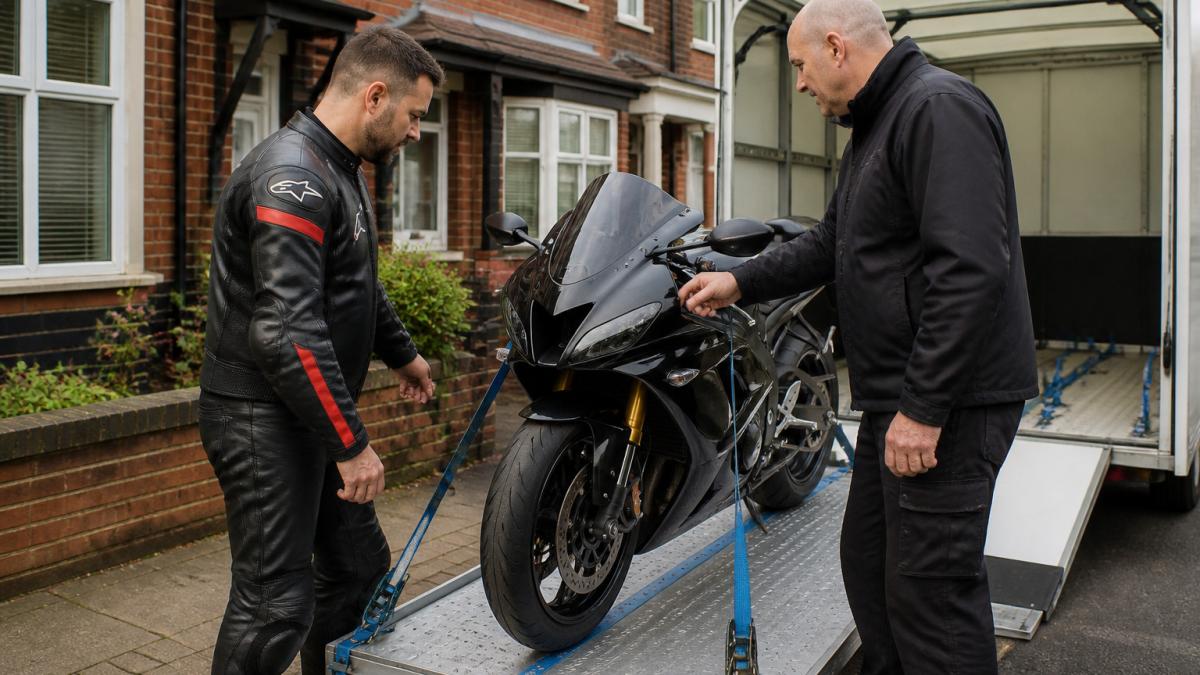
Clear a path from the bike to the loading point, particularly on a terraced property where the access may be tight. Take your own photographs of the bike before collection as a personal record, alongside the condition report taken by the transporter. Keeping the keys, documents, and any spare parts ready on the day avoids delays.
If Your Motorcycle Is Damaged in Transit
If damage occurs during transport, act quickly and calmly. First, do not accept delivery without inspecting the bike against the collection condition report. Note any new marks, scratches, or faults before you sign for the bike, and photograph everything from several angles. Raise the issue with the transporter at once and ask for a written record of the damage.
Next, notify the insurer named on the transit policy and follow its claims process. Keep all receipts, quotes for repair, and correspondence. Your own motorcycle insurer may also need to be informed, depending on your policy.
Booking Your Motorcycle Move With Smiffy's
Ready to book? Smiffy's motorcycle transport is run by a passionate rider with years of breakdown recovery experience, and we handle every bike with the care we would want for our own. You can see the range of transport options for new, used and broken-down bikes and request a quote. Whether you are moving a new purchase, heading to a track day, or transporting a bike to a rally, we offer fully insured door-to-door service across Merseyside and the UK. Our team inspects each bike at collection, giving you a record of its condition from the outset.
Get in touch to request a quote, check current pricing, or talk through the cover that suits your bike. You can reach us on WhatsApp, Facebook, Instagram or TikTok with any questions before you commit. Call to book to get started.
Frequently Asked Questions
How much does it cost to transport a motorcycle in the UK?
Prices depend on distance, whether the bike is moved on an open or enclosed trailer, collection and delivery addresses, and the dates you need. Quotes are individual, so the most reliable figure is one for your own route and bike. Smiffy's pricing depends on quantity, dates and delivery, so check the pricing page on the Smiffy's website or request a quote for your specific journey.
What affects the price of motorcycle transport?
The main factors are the distance travelled, the type of transport used, the weight and condition of the bike, the accessibility of the collection and delivery points, and how flexible your timing is. Short local moves are generally cheaper than long-distance journeys, and urgent or fixed-date bookings can cost more than flexible ones. Ask any provider to itemise handling fees and additional charges so you can compare quotes fairly.
Does motorcycle transport insurance cover damage in transit?
Transit insurance is designed to cover loss or damage while the motorcycle is in the transporter's care, but the details vary by provider. Check whether the cover is included in the price, what the maximum payout is, and which causes of damage are excluded. Your own motorcycle policy may not respond to damage that happens during a transport journey, so do not assume one covers the other.
What should I check in a motorcycle transport insurance policy?
Look at the insurance limit, which is the most the provider will pay for a claim, and compare it with the value of your bike, especially for classic or custom machines. Check the excess, which is the amount you pay before cover applies, and read the exclusions carefully. Confirm how the provider inspects the bike on collection and delivery, since a written condition report makes any later claim much easier to assess.
How can I get an accurate motorcycle transport quote?
Give the provider the exact collection and delivery postcodes, the make, model and approximate weight of the bike, and the dates you need. Mention any modifications or non-standard features, and ask whether insurance is included. Requesting quotes from several providers using the same details lets you compare like for like rather than comparing different service levels.
What should I do if my motorcycle is damaged during transport?
Photograph the damage before accepting delivery and note it on the delivery paperwork, ideally against the condition report taken at collection. Report the damage to the transport company promptly and in writing, keeping copies of all correspondence. If the company does not resolve the matter, check your transit insurance documents for the claims process and the deadlines that apply.
Is my motorcycle covered by my own insurance while it is being transported?
Your own policy may cover the bike in some situations, but many policies restrict cover while the bike is being carried by a third party or while it is off the road. Read your policy wording or call your insurer before the move. If cover is unclear, arrange transit insurance through the transport provider so the protection is clearly in place for the journey.
Is a specialist motorcycle transporter better than a general courier?
A specialist motorcycle transporter uses equipment and handling methods designed for two-wheeled vehicles, such as straps, ramps and stands that hold the bike securely. A general courier may not have that experience and may not insure a motorcycle in the same way. Ask how the bike will be loaded, secured and inspected before deciding.