 How-to
How to Transport a Motorcycle Safely in the UK
Last Updated: November 10, 2026
Quick Summary
To transport a motorcycle safely in the UK, prepare the bike first by checking the battery, fuel and leaks and removing loose accessories, then secure it with rated straps and a wheel chock in an enclosed van, trailer or professional transporter. Load and unload slowly with the engine off, and recheck straps during the journey.
- Check the battery, fuel and for leaks, and remove mirrors, luggage and loose accessories before loading.
- Use only lashing rings with a stated load rating, and avoid fairings, mirrors, exhausts and brake lines.
- Fit a wheel chock to the front wheel first, then strap the front and rear, compressing the forks by roughly 25 to 50 mm.
- Load and unload in first gear with the engine off, using a rated ramp set at the shallowest angle possible.
- Stop after the first 15 to 20 miles and at each fuel stop to recheck the straps.
Table of Contents
- Preparing Your Motorcycle and Choosing Transport Equipment
- How to Secure a Motorcycle in a Van or Trailer
- Loading, Unloading and Checks During the Journey
- What Motorcycle Transport Insurance Covers and Booking Your Move with Smiffy's
- Frequently Asked Questions
Preparing Your Motorcycle and Choosing Transport Equipment
Most transit damage comes from poor preparation or the wrong equipment, so get both right before you transport a motorcycle. If you have only just bought your bike online, our guide to moving a motorcycle after an online purchase covers getting it safely from the seller to your door.
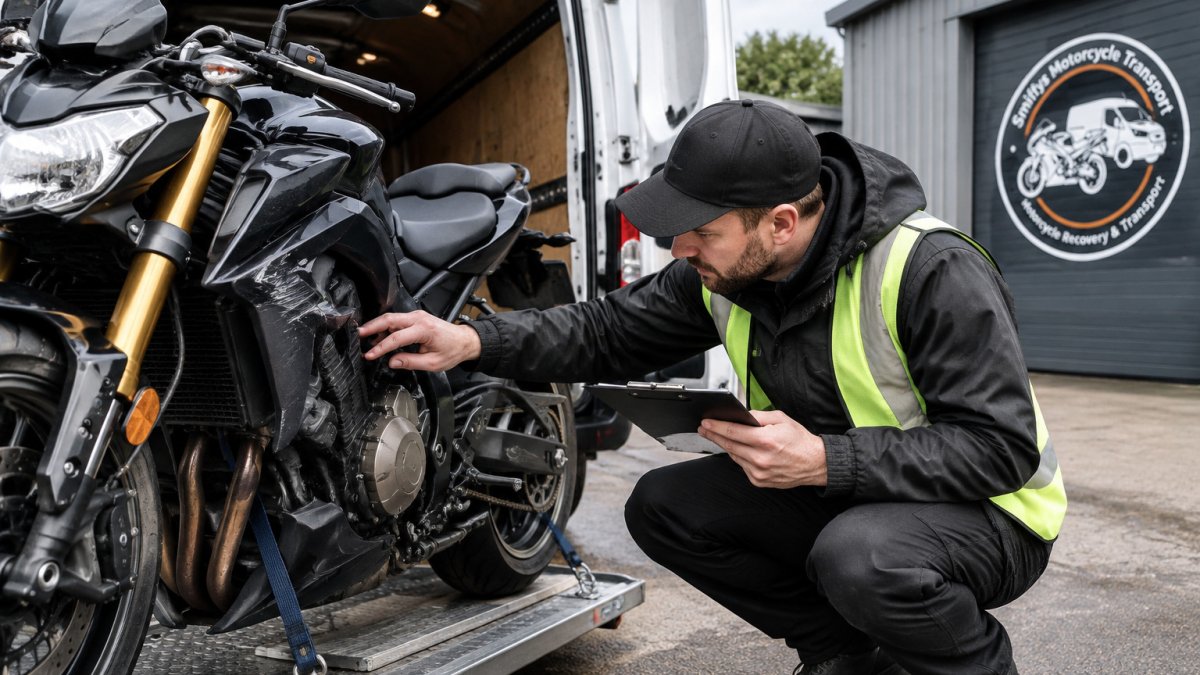
Check the bike first before you transport a motorcycle: battery charged, fuel low, no leaks. Remove loose items like mirrors, luggage and aftermarket accessories.
-
Enclosed van or box trailer: best protection from weather and debris
-
Open trailer: cheaper, but exposed
-
Professional motorcycle transporter: easiest if you lack kit or time
-
Ratchet straps rated for the bike's weight
-
A wheel chock or stand
-
Ramps of the correct length and strength
-
Covers or padding for handlebars and bodywork
Cheap straps stretch and loosen over a long journey, so buy quality.
The article compares the three main ways to transport a motorcycle, so here is how they differ. To weigh what professional transport costs against doing it yourself, see our motorcycle transport cost guide for the UK.
| Option | Best for | Key difference |
|---|---|---|
| Enclosed van or box trailer | Protection from weather and debris | Best protection |
| Open trailer | Lower cost | Exposed to the elements |
| Professional motorcycle transporter | Those lacking kit or time | Easiest option |
How to Secure a Motorcycle in a Van or Trailer
Securing the bike properly stops it shifting, falling or rubbing. Over-tightening compresses the suspension and damages fork seals, fairings or wiring, hold the bike rigid without crushing it.
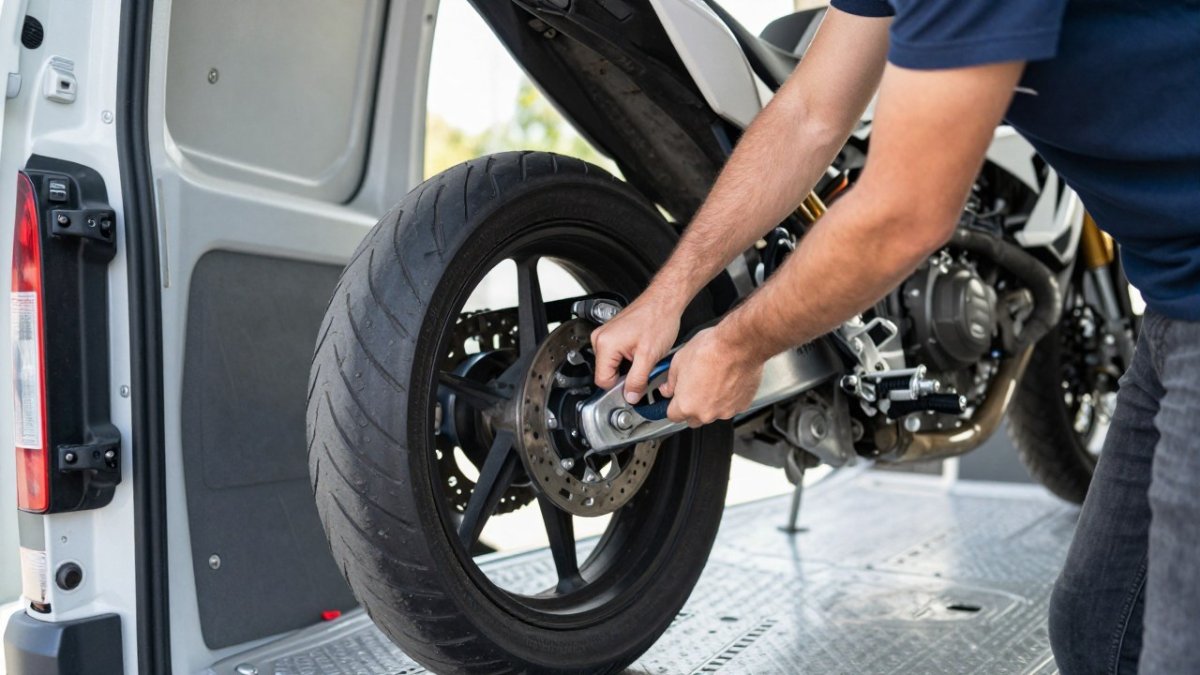
Check the anchor points before you thread a single strap
Not every metal loop in a van floor is a load anchor. Use only lashing rings with a stated load rating, rated for the bike's weight plus a margin, and check bolts and welds for corrosion.
On the bike, use the frame, lower fork legs or footpeg mounts. Avoid fairings, mirrors, exhausts, brake lines and the rear light cluster, which crack or bend under load. A soft tie loop around a fork leg spreads the load and protects the finish.
Fit the wheel chock first
A wheel chock holds the front wheel straight and takes much of the fore-and-aft load off the straps. Check it fits the tyre width and diameter, too wide lets the wheel rock, too narrow pinches the tyre. Bolt or clamp it to the floor and roll the bike in until the wheel is seated.
Strap the front
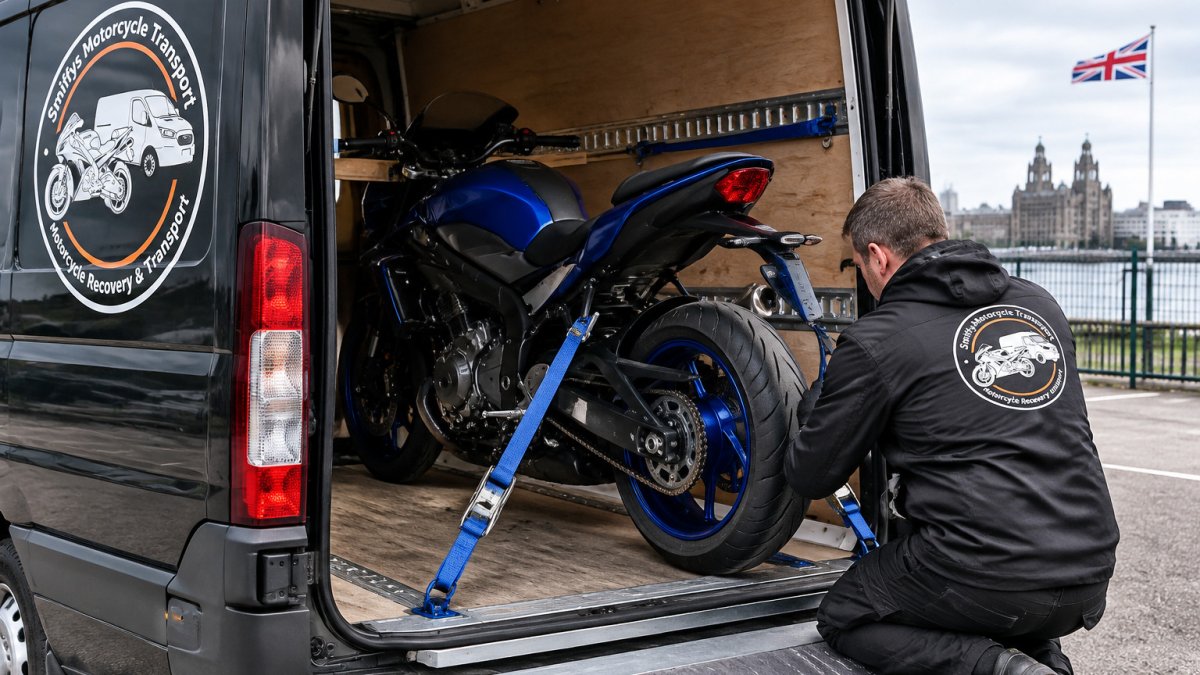
Run one strap from each side of the handlebars or fork yoke down and slightly forward to the floor anchors, at roughly 45 degrees. Tighten each side evenly, a few clicks at a time.
Compress the front suspension by roughly 25 to 50 mm, not to the bump stops. If the bike has electronic suspension or air forks, check the handbook first.
Strap the rear
Run rear straps from the frame or rear footpeg mounts, not the rear light or indicators, down and slightly rearward. They should stop the back wheel walking sideways and the bike pivoting on the front chock. Keep the rear suspension near normal ride height.
Test for movement
With all straps tight, push the bike firmly from the side at the rear wheel and handlebars. A correctly secured bike moves a few millimetres, then stops. If it rocks, creeps or the straps go slack, fix the loose anchor before you close the doors.
Watch out: over-tightened straps can crush forks and damage suspension, and a strap hooked to a plastic fairing will crack it within a few miles.
Match the method to the vehicle
In a van, use the floor lashing rings and wheel chock, and keep the bike close to the front bulkhead. In a pickup, use the bed-mounted tie-down points and a front wheel chock; never hook straps to the tailgate or body panels. On an open trailer, add a second pair of rear straps and check the trailer's load rating and coupling. Whatever the vehicle, confirm the payload limit covers the bike plus rider, fuel and kit.
Loading, Unloading and Checks During the Journey
Loading and unloading are when accidents most often happen. Take your time and, if possible, have a second person help steady the handlebars and guide the front wheel into the chock.
Set up the ramp before the bike moves
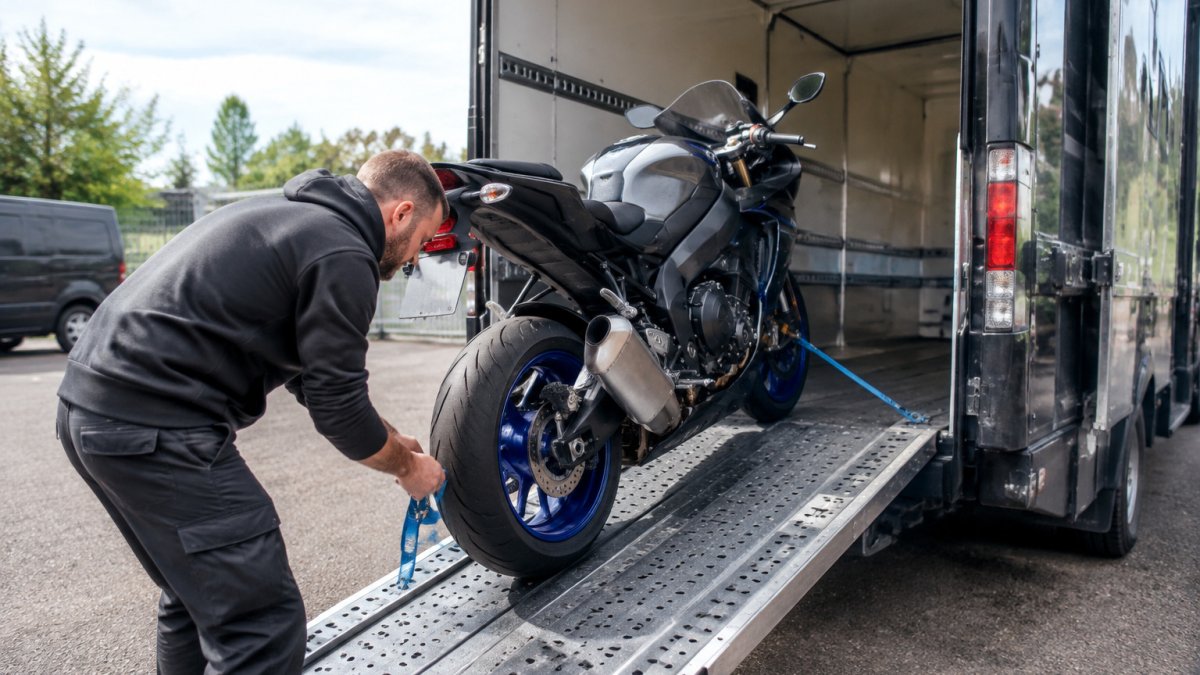
Choose a ramp rated for the bike's weight plus a margin. Set the angle as shallow as the vehicle allows, a long, low ramp is safer than a short, steep one. Secure the ramp to the vehicle so it cannot kick out, and keep it clean and dry.
Load with the engine off
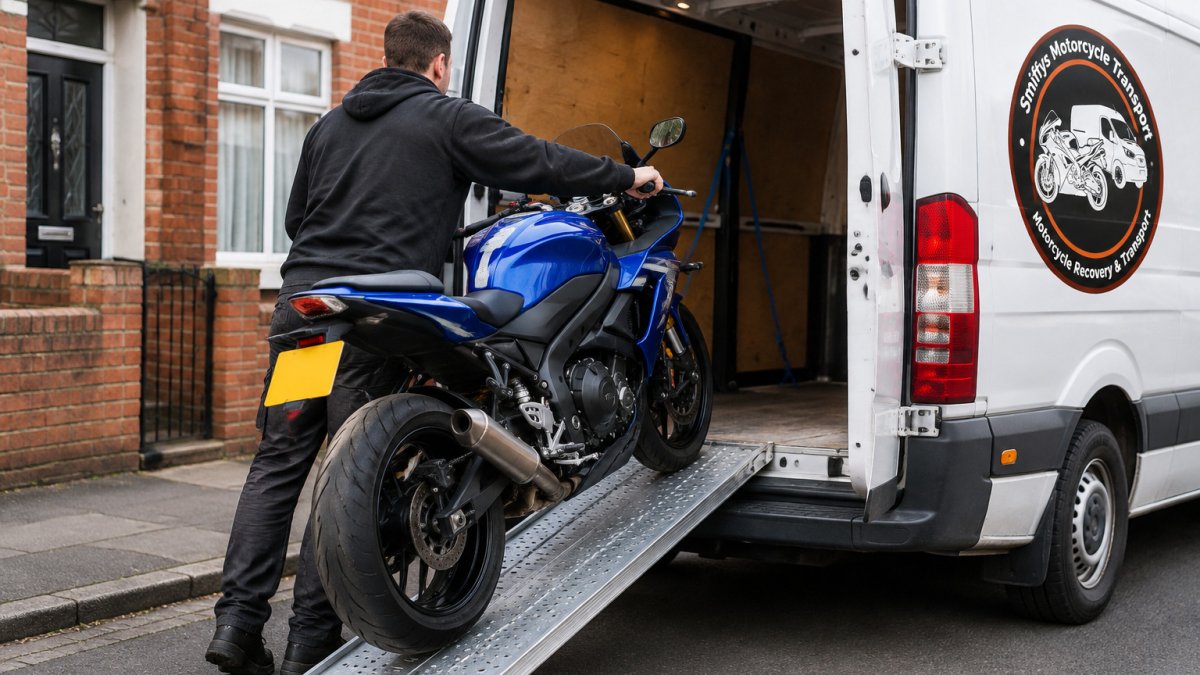
Walk the bike up in a straight line with the engine off and the bike in first gear, using the clutch and front brake to control the roll. Do not ride up unless you are experienced and the ramp is rated and secured for it.
Watch out: never try to lift the full weight of the bike on your own; a bike that tips on a ramp can pin a leg or throw you off the side.
Unload in reverse, with the same care
Before unloading, check the ramp is still secured and the floor behind is clear. Release the straps rear first, then front, keeping a hand on the bike. Roll it down in first gear with the front brake feathering the descent, with a helper steadying the handlebars if possible.
Recheck the load during the journey
Stop after the first 15 to 20 miles to check the straps, then at each fuel stop and after rough road. Look for slack straps, opened hooks, the bike creeping in the chock, and rubbing marks. If a strap has loosened, re-tension it evenly on both sides.
If the bike has shifted, do not simply tighten the existing straps. Stop safely, release the load, re-centre the bike in the chock and refit from scratch. Keep a spare strap and a few soft ties in the vehicle.
What Motorcycle Transport Insurance Covers and Booking Your Move with Smiffy's
Before you book any transport, check what cover is included, and ask exactly what is covered and how claims work. For a full explanation, read our guide to motorcycle transport insurance: what is covered in the UK.
Smiffy's motorcycle transport offers door-to-door collection and delivery. If you would rather not do the loading yourself, you can request a quote for moving your bike and we will handle the rest.
Frequently Asked Questions
What is the safest way to transport a motorcycle?
The safest method is to load the motorcycle upright onto a secure ramp, stabilise it with a wheel chock or stand, and fix it at four points: front and rear tie-downs attached to solid frame or chassis anchor points, never to the handlebars, mirrors or brake and clutch levers. Use ratchet straps tightened evenly, check them after the first few miles, and keep the bike upright in a van or enclosed trailer where possible. For a stress-free result, many riders hand the job to a specialist motorcycle transporter.
Should you use a wheel chock when transporting a motorcycle?
Yes. A wheel chock or stand holds the front wheel straight and stops the bike rocking or shifting during transit, which reduces stress on the forks and the straps. Choose a chock that fits your tyre width and secure it to the floor of the trailer or van. Use it alongside front and rear straps, not instead of them, because a chock alone does not prevent the bike toppling sideways.
Does motorcycle insurance cover damage during transport?
Not always. Your own motorcycle insurance policy may not cover damage while the bike is in someone else's care, so check the terms before you book. Ask what the policy covers, what the excess is, and whether it includes custom or high-value parts. Smiffy's motorcycle transport can explain the cover in place for your bike when you call to book.