 Ultimate guide
Motorcycle Transport Cost UK: A Complete Guide
Quick Summary
Motorcycle transport cost in the UK depends on distance, route, bike size and condition, access at each end, and the transport method chosen. Because providers quote on different assumptions, compare quotes only after confirming what each one includes, such as insurance, VAT and loading.
- Distance is the biggest price driver, and longer journeys usually lower the cost per mile.
- Confirm whether a quote includes collection, delivery, loading, insurance and VAT before comparing.
- Larger or non-running bikes and difficult access points can increase the final price.
- Ask each provider for the excess, declared value limit and cancellation terms in writing.
- Photograph the bike and sign a condition report at both collection and delivery.
Table of Contents
- What Motorcycle Transport Costs in the UK
- What Drives the Price of Motorcycle Transport Prices
- Short-Distance Versus Long-Distance Transport
- How Transport Method Changes the Price
- Getting Accurate Motorcycle Transport Quotes
- Motorcycle Transport Insurance and Claims Explained
- Motorbike Delivery Time and Scheduling
- Seasonal, Urgent and Access Surcharges to Watch For
- Booking Your Motorcycle Collection With Smiffy's
- Frequently Asked Questions
What Motorcycle Transport Costs in the UK
Last Updated: 8 November 2026
Moving a motorcycle across the UK is a practical decision, and most buyers want a clear idea of motorcycle transport cost UK explained before they book. Door-to-door motorcycle transport for riders, dealers and event organisers usually comes down to distance, bike type and timing. Without verified current price tables, the honest answer is that cost depends on a handful of variables rather than a single figure.
Quotes can vary widely between providers, even for the same route. Our motorcycle transport pricing and insurance explainer sets out what a quote typically covers and how to compare them. A common approach is to ask each provider the same questions so the comparison is fair. Pricing depends on the route, the bike and the date, and current figures are on the business's pricing page.
Two points matter most when reading any quote. First, check whether it covers collection, delivery and insurance, or only the lift itself. Second, check whether it assumes a standard driveway or allows for access restrictions. Cheap headline figures can omit both.
What Drives the Price of Motorcycle Transport Prices
Several factors shape the final figure, and they tend to interact. Distance and route are the largest, followed by the size and condition of the bike and the method of transport used.
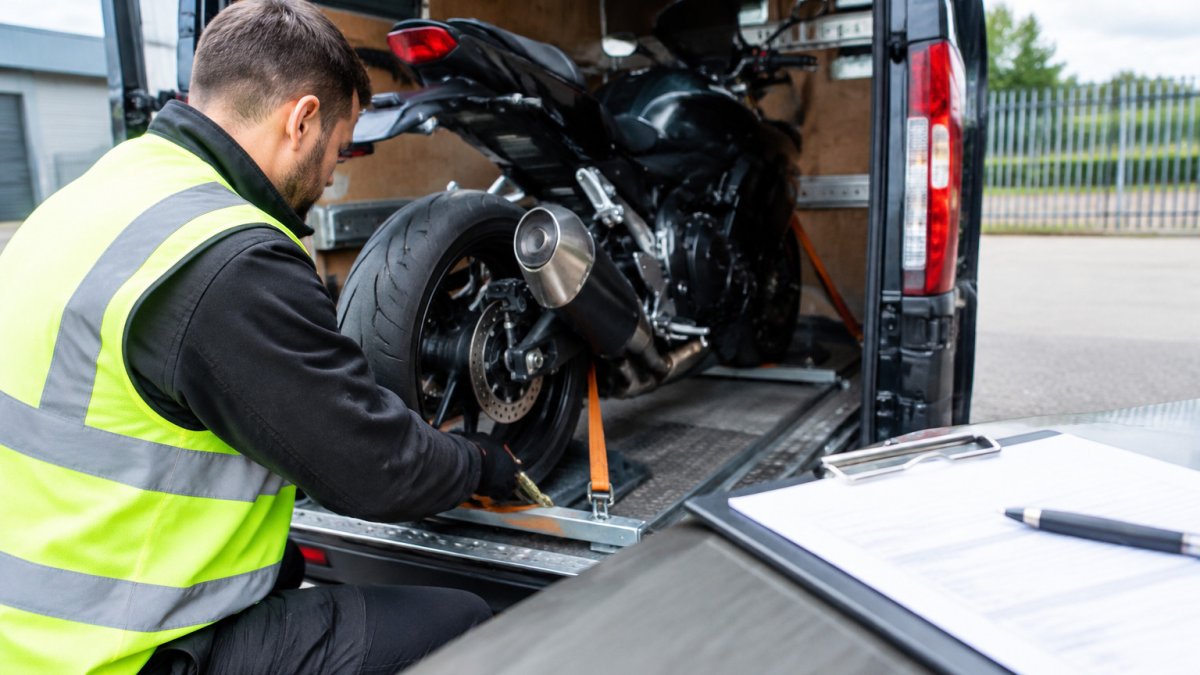
Motorcycle transport prices also reflect how much handling is involved. A bike that needs careful loading, strapping and inspection takes more time than one that rolls straight onto a trailer. Providers that inspect the bike at collection and document its condition usually build that time into the quote.
Distance, Route and Cost Per Mile
Distance is the most common driver of cost, and it is often expressed as a cost per mile. Longer journeys generally lower the per-mile rate, because fixed costs are spread over more miles. Short local runs carry a proportionally higher cost per mile even when the total bill is smaller.
The route matters too. Motorway-friendly routes are usually simpler to plan than journeys into rural areas, islands or remote postcodes, where access and driving time can increase.
Bike Size, Condition and Access
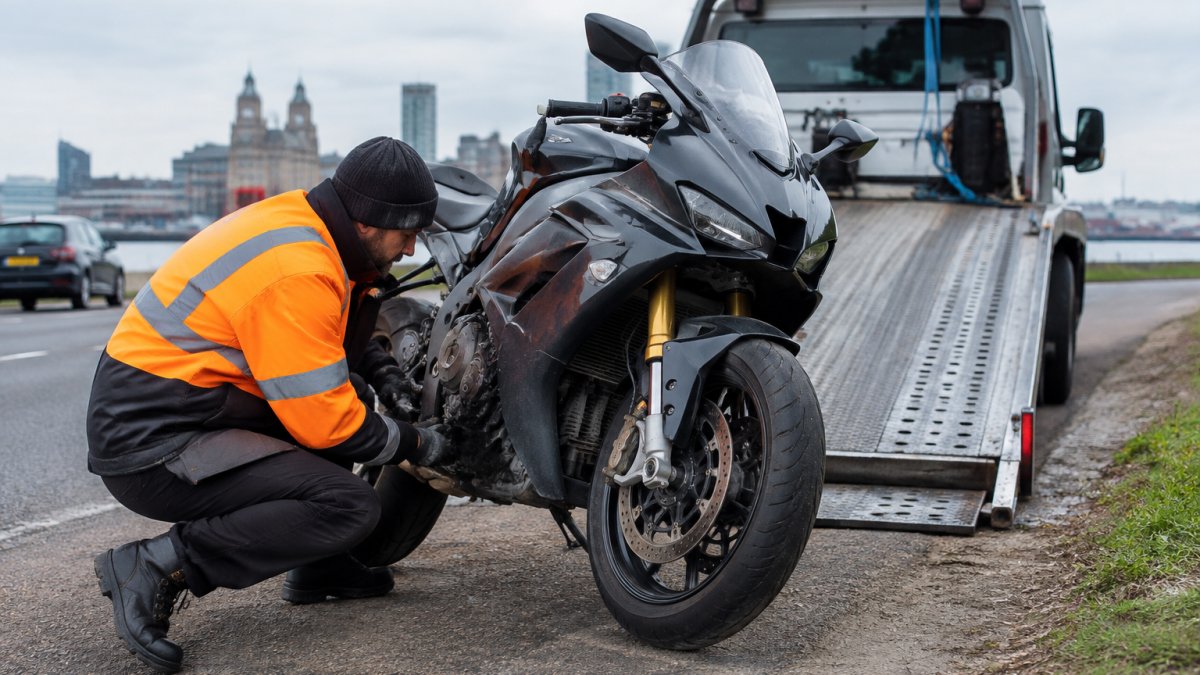
Larger or heavier machines require more secure fixing and sometimes a larger vehicle, which affects price. A non-running bike, or one with damage, needs extra care and may need a different handling arrangement.
Access is equally important. A terraced house with a narrow street, a driveway that is hard to reach, or a collection point that needs a tail-lift all add time. Riders who describe their access accurately when they book usually receive a more reliable quote.
Short-Distance Versus Long-Distance Transport
Short-distance moves, such as collecting a bike from a dealer within the same region, usually cost less in total but more per mile. Long-distance moves, such as taking a bike from one end of the country to the other, have a higher total cost but often a lower cost per mile.
The right choice depends on your timescale. A short local move may suit a rider who needs the bike back within days, while a long-distance move suits a bike bought online from another region.
How Transport Method Changes the Price
The way a bike travels is one of the clearest levers on price.
Riders should decide which matters more to them when requesting a quote.
Getting Accurate Motorcycle Transport Quotes
Most published motorcycle transport prices are not directly comparable, because providers quote on different assumptions. One figure may be the van price only; another may bundle collection, delivery, transit insurance and VAT. Before you compare two numbers, establish what each one actually covers. The practical way to do this is to build a like-for-like checklist and ask every provider the same questions in the same order.
What a quote should itemise
A quote you can trust will normally break down into the following lines. Ask for each one explicitly rather than accepting a single all-in figure.
- Collection and delivery, whether the price is door-to-door or kerbside, and whether the driver will help push or load the bike.
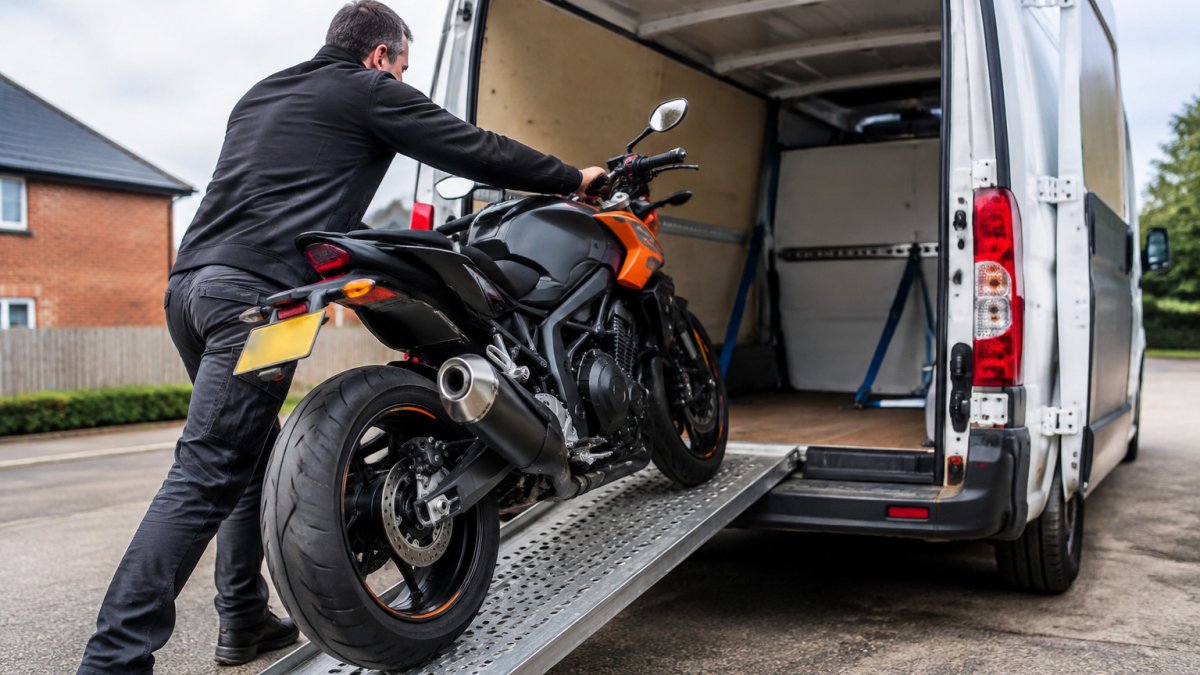
- Loading and unloading, whether a tail-lift, ramp or extra handler is included, and whether that changes if the bike is a non-runner.
- Transit insurance, the declared value covered, the excess, and whether cover is included or charged as an extra.
- VAT, whether the figure quoted is inclusive or exclusive. A price that looks 20% cheaper may simply be quoted before VAT.
- Fuel and mileage, whether these are built into the price or added afterwards.
- Waiting time, the free waiting period at each end, and the hourly rate once it expires.
- Cancellation and rescheduling, the notice period and any fee if your plans change.
A common pattern is for the headline price to cover the lift only, with insurance, VAT and access equipment added later. That is why a quote that appears higher on the phone can end up cheaper on the invoice.
Worked example: how to compare two quotes on the same route
Suppose you are moving a 200 kg naked bike from a dealer forecourt to a residential address, roughly 180 miles apart, on a standard weekday. Provider A quotes a single figure; Provider B quotes a lower figure plus extras. Rather than comparing the headline numbers, rebuild both quotes on the same basis:
- Confirm both prices are door-to-door and include loading at both ends.
- Add VAT to any quote given exclusive of VAT so both are gross figures.
- Add the insurance premium for your declared value to any quote where cover is optional.
- Add any access charge if either end needs a tail-lift or a narrow-street handball.
- Add the waiting-time rate if you cannot guarantee the bike is ready when the driver arrives.
Only after those five adjustments are the two prices genuinely comparable. In practice, the gap between the cheapest headline and the cheapest like-for-like figure is often the difference between a quote that excludes insurance and one that includes it.
Questions to ask every provider
Use the same script for each enquiry so the answers line up:
- Is the price door-to-door, and is loading included at both ends?
- Is transit insurance included, what declared value does it cover, and what is the excess?
- Is VAT included in the figure you have given me?
- What is the free waiting period, and what do you charge after that?
- What happens if the bike is a non-runner or has no keys?
- What is your cancellation and rescheduling policy?
- Will the driver photograph the bike at collection and delivery?
Watch out: a provider who will not put the inclusions in writing is the one most likely to add charges after the bike is loaded.
Requesting a quote
Gather the basics before you enquire: collection and delivery postcodes, the make, model and condition of the bike, whether it runs, any access restrictions at either end, and your preferred date range. Request a quote from Smiffy's motorcycle transport through the quote request page, where you can describe your bike and route. For questions before you book, contact Smiffy's motorcycle transport directly by WhatsApp, Facebook, Instagram or TikTok.
The table below sets out the inclusions to confirm on every quote, so you compare like with like.
| Quote item | What to confirm | Why it matters |
|---|---|---|
| Collection and delivery | Door-to-door or kerbside | Changes the total cost |
| Loading and unloading | Tail-lift or ramp included | Access can add charges |
| Transit insurance | Declared value and excess | Affects claim protection |
| VAT | Inclusive or exclusive | Can shift the price by 20% |
| Fuel and mileage | Built in or added later | Avoids surprise extras |
| Waiting time | Free period and hourly rate | Applies if the bike is not ready |
| Cancellation | Notice period and any fee | Relevant if plans change |
Motorcycle Transport Insurance and Claims Explained
Transit insurance is the part of a motorcycle transport quote that riders most often misunderstand, and it is the part that matters most when something goes wrong. The key distinction is between the provider's own liability cover, which protects the business, and goods-in-transit cover, which protects your bike while it is in their care. Ask which one applies to your booking, because they are not the same thing.
What transit cover typically includes and excludes
Goods-in-transit policies generally cover accidental damage and theft while the bike is in the carrier's custody, up to a declared value. Most practitioners find the following pattern:
- Covered: damage caused during loading, transit or unloading; theft from a locked vehicle; loss in transit.
- Usually excluded: pre-existing damage, mechanical or electrical failure, wear and tear, tyres, and damage caused by the bike not being secured as instructed.
- Often excluded: personal effects, accessories, helmets and luggage carried with the bike, and undeclared modifications.
- Conditional: cover above a certain value may require the bike to be declared in advance, and some policies exclude non-runners or bikes without keys unless agreed.
Excess, liability limits and what to check in writing
Ask three questions before you confirm: what is the excess on a claim, what is the maximum declared value the policy will accept, and is cover included in the quote or charged separately. A low headline transport price with insurance added later can cost more than a slightly higher all-in quote. Ask for the cover summary in writing, a clear answer about excess, exclusions and settlement is a better sign than a verbal assurance.
Evidence to record at collection and delivery
Claims succeed or fail on evidence. Record the following at both ends of the journey:
- Photographs of all four sides, the clocks, the frame and engine numbers, and any existing damage, taken before the bike is loaded.
- A signed condition report at collection, with the driver, noting any scuffs, cracks or missing parts.
- The keys and documents handed over, and who received them.
- Photographs at delivery before you sign, taken from the same angles as the collection set.
- The delivery note, signed only after you have inspected the bike.
Watch out: signing a delivery note before inspecting the bike can be treated as acceptance that it arrived in good condition, which makes a later claim much harder.
How a claim is usually handled
Report damage to the provider in writing as soon as you find it, attaching your collection and delivery photographs and the signed condition report.
Smiffy's motorcycle transport is fully insured. For a fuller explanation, see the motorcycle transport insurance guide.
Motorbike Delivery Time and Scheduling
Delivery timeframes depend on distance, the provider's schedule and the availability of collection and delivery dates. Booking early gives more flexibility, particularly for track days, rallies and events where the bike must arrive by a fixed date.
Plan with a small margin. If a bike is needed for a specific day, request dates that allow for a delay rather than an exact arrival time. Confirm the expected window when you book, and ask what happens if the schedule changes.
Seasonal, Urgent and Access Surcharges to Watch For
Some quotes include extra charges that are easy to miss. Peak seasons, such as the spring and summer riding months and rally weekends, can increase demand and price. Urgent bookings, where a bike must move at short notice, may also attract a premium.
Access-related surcharges apply when a collection or delivery point is difficult to reach, requires special equipment, or falls outside a standard area. Ask whether any of these apply before you accept a quote, so the final invoice does not surprise you.
Booking Your Motorcycle Collection With Smiffy's
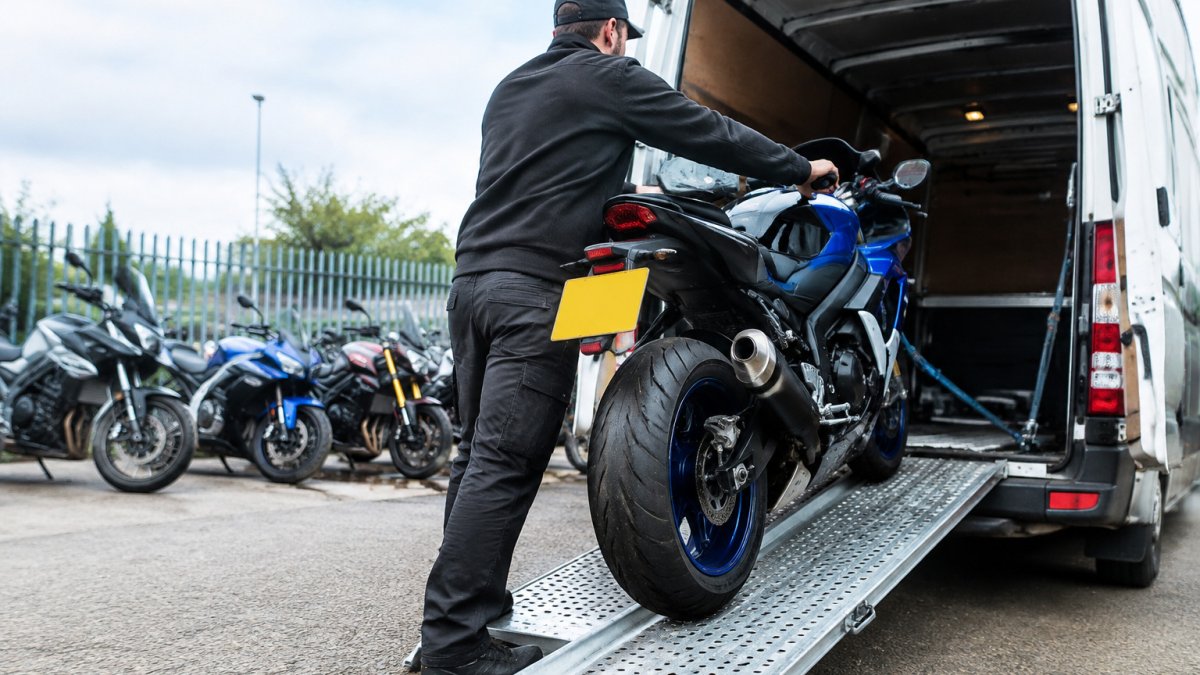
Smiffy's motorcycle transport offers door-to-door collection and delivery across Merseyside and the UK.
To book, prepare your collection and delivery addresses, the bike details and your preferred dates. You can request a quote for your motorcycle transport online, or get in touch with Smiffy's motorcycle transport to talk through your options before you commit. Current prices are on the business's pricing page.
Frequently Asked Questions
How much does it cost to transport a motorcycle in the UK?
Motorcycle transport costs in the UK vary with distance, bike size, collection method and how soon you need the bike moved. Prices are not published as fixed rates on this page, because each journey is quoted individually. For current prices on your route, request a quote from Smiffy's Motorcycle Transport, which will confirm the figure before you book. Comparing a quote against the distance, the bike's weight and any access requirements will show you what you are paying for.
What affects the cost of motorcycle transport?
The main factors are the distance and route, the size and condition of the bike, whether the bike runs, the pickup and drop-off locations, and the timeframe you need. Access issues such as a narrow driveway or a bike that needs winching can also change the quote. Ask for these points to be itemised so you can see exactly what affects your price.
Does motorcycle transport include insurance?
Smiffy's Motorcycle Transport offers fully insured door-to-door transport. Before booking, ask for written confirmation of the cover level, the amount insured and how a claim for damage in transit is handled. Keep photographs of the bike before collection.
How long does motorcycle delivery take?
Delivery time depends on distance, route, collection scheduling and carrier availability. If you need the bike for a specific date, such as a track day or rally, tell the team when you book so the timing can be planned around it.
Can a non-running motorcycle be transported?
Yes, a non-running motorcycle can usually be transported, but the bike will need to be loaded and secured differently, which can affect the price. Let the transport provider know if the bike does not run, if it has steering or brake problems, or if it needs recovery equipment, so the correct vehicle and process are arranged.
What should I check before booking a motorcycle transport service?
Confirm the total quoted price, what is included, the insurance cover and insured value, the collection and delivery windows, and how the bike's condition is recorded. Ask how the inspection report is produced and whether you receive photographs. Check the pickup arrangements for your property, and make sure the bike is clean, has a sufficient fuel level and has any loose accessories removed.