 Ultimate guide
Motorcycle Breakdown Recovery in Merseyside: The Complete Guide
Quick Summary
Motorcycle breakdown recovery is the service that moves a stranded bike to a garage, home or other destination when it cannot run safely. In Merseyside, check your policy for roadside assistance, recovery limits and excess before you need it.
- Roadside assistance covers fixes at the kerb, while recovery covers transporting the bike to a garage or home.
- Confirm your policy names your vehicle type, whether motorcycle, moped or scooter.
- Ask for the all-in quote, since a cheap figure may exclude the rider or an out-of-hours premium.
- Move to a safe spot and give the operator the nearest junction or landmark.
- Strap the bike at the frame or forks, not the handlebars or mirrors, and switch the fuel tap off.
Table of Contents
- What Motorcycle Breakdown Cover Actually Includes
- What to Do When Your Motorcycle Breaks Down in Merseyside
- Motorcycle Roadside Assistance: What a Call-Out Involves
- How Motorcycle Recovery Is Priced and What Drives the Cost
- Local Logistics in Merseyside: Recovering a Bike on Busy Roads
- DIY Versus Professional Recovery: Choosing the Right Route
- Motorcycle-Specific Transport Safety and Post-Recovery Garage Choices
- Booking Your Recovery or Transport with Smiffy's
- Frequently Asked Questions
What Motorcycle Breakdown Cover Actually Includes
Last Updated: November 12, 2026
Motorcycle breakdown recovery is the service that gets a stranded bike off the road and to a garage, home or other destination when it will not run safely. Most riders buy it as part of a breakdown policy, but what that policy covers can differ considerably between providers. Smiffy's motorcycle transport has years of recovery experience, and it is worth knowing how far a policy's cover really reaches before you need it.
Green Flag advertises 24/7 roadside assistance and says it can fix a motorcycle at the roadside, tow it to a garage or get the rider home (Green Flag motorcycle breakdown cover). The RAC applies its cover to motorcycles, mopeds and scooters alike (RAC breakdown cover for motorcycles). The point is that a policy is a bundle of services, and you should read what is in it.
Roadside assistance versus recovery
Roadside assistance is the help given where the bike stops: a fix at the kerb, a battery jump, a puncture repair or a small fuel delivery, with motorcycle breakdown recovery covering the transport element. Recovery is the transport element, moving the bike and usually the rider to a garage or home. Many policies include both, but some only cover assistance with recovery sold as an add-on.
Check whether recovery is unlimited, how far the bike can be taken, and whether the rider can continue their journey. A home start, where the bike is fixed on the spot, is rarely the same as being towed to a workshop.
Coverage for two-wheeled vehicles and 24/7 support
Two-wheeled cover is not always identical to car cover. Confirm the policy names your vehicle type, whether that is a motorcycle, moped or scooter. Round-the-clock support is widely advertised, but response times and availability in your area are what matter when you are stuck at night.
What to Do When Your Motorcycle Breaks Down in Merseyside
If your motorcycle fails on the road, get the bike and yourself to safety first. Move onto a pavement or hard shoulder if it is safe, switch on hazard lights and stay away from the carriageway. Then call your breakdown provider or a recovery service, giving your location and the bike's registration.
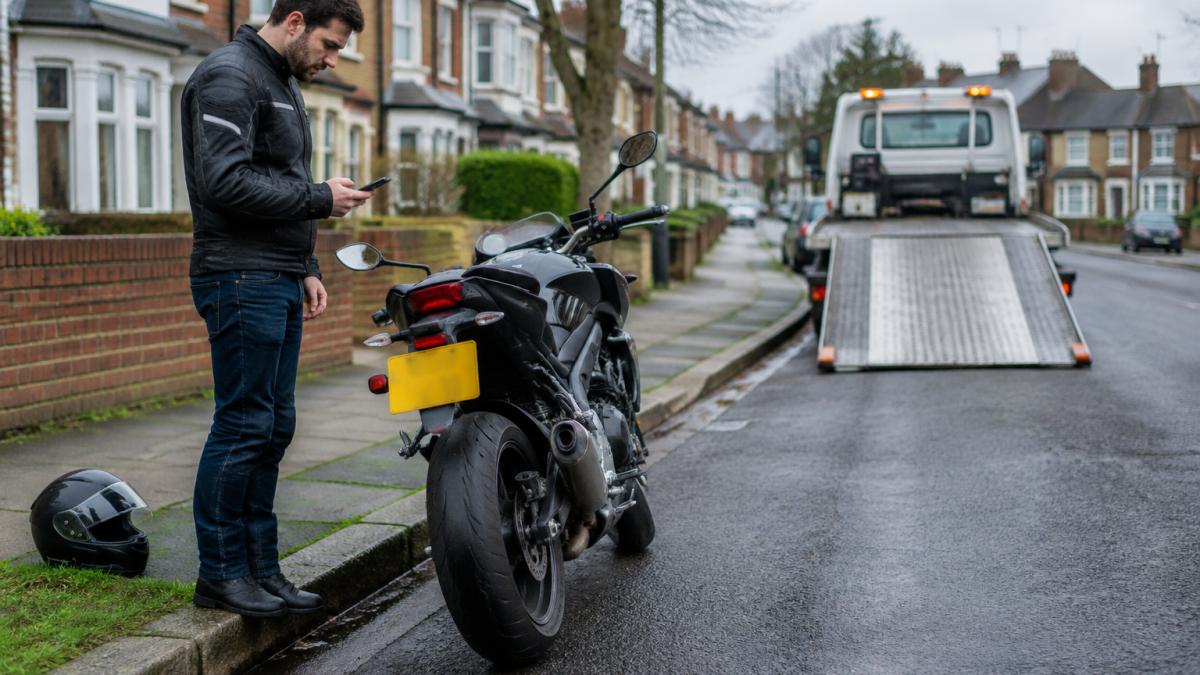
Have your policy number, vehicle details and a description of the fault ready. This speeds up the call-out and helps the operator decide whether the bike can be repaired at the roadside or needs to be towed.
Motorcycle Roadside Assistance: What a Call-Out Involves
A typical call-out starts with a short diagnostic conversation, then the operator dispatches a suitable vehicle. Some attendants can fix minor faults such as a flat tyre or flat battery on site. Others will load the bike onto a recovery vehicle and take it to a garage of the provider's choice or one you nominate, depending on your policy.
Ask how long the attendant expects to take and whether you will be charged for any excess. Keep the reference number, as you will need it if the job is not completed as promised.
How Motorcycle Recovery Is Priced and What Drives the Cost
Recovery pricing is not a single number. Quotes generally depend on factors such as distance, the size and weight of the bike, the time of day, and how difficult the bike is to access or load.
What a quote usually includes
When you request a quote, ask what it includes, such as the call-out, loading and transport, and whether the rider can travel with the bike. Confirm the destination before the vehicle is dispatched, as a change of destination may change the price.
Policy tiers and what they mean in practice
Breakdown policies are usually sold in tiers, with different levels of roadside assistance and recovery. Read the policy schedule for the call-out limit and the excess before you need them, because those two numbers decide what you actually pay on the day.
The cost drivers riders overlook
- Access: a bike behind a locked gate, in a multi-storey car park or on a narrow slip road takes longer to load and may need a smaller vehicle.
- Weight and size: a heavy tourer or a bike with panniers and a top box needs a rated ramp and more securing points.
- Time: out-of-hours call-outs and bank holidays often carry a premium.
- Distance: the further the destination, the more fuel and driver time are built into the price.
We cannot quote figures for this service here. For current prices, check Smiffy's motorcycle transport's website or request a quote, as costs depend on your route and bike. For the wider picture, our guide to motorcycle transport costs explains what each quote includes.
Watch out: a quote that looks cheap often excludes the rider, the destination change or the out-of-hours premium, so ask for the all-in figure before you agree.
Local Logistics in Merseyside: Recovering a Bike on Busy Roads
Merseyside has heavy commuter traffic, tight residential streets and busy junctions around Liverpool, Birkenhead and the M62 and M57 corridors. Recovery on these roads needs careful positioning of the recovery vehicle, particularly when a bike is on a narrow carriageway or a slip road.
Riders can help by moving to a safe spot before the recovery arrives and by giving the operator precise location details, such as the nearest junction or landmark (The Highway Code - Breakdowns and incidents (275 to 287) - Guidance). Make sure the bike is in neutral with the handlebars secured if you are able to move it.
DIY Versus Professional Recovery: Choosing the Right Route
Most guides tell you to call a professional. The useful question is when you can safely move the bike yourself and when you cannot. Use this decision matrix before you reach for a van or a trailer.
When DIY is reasonable
- The bike rolls freely and steers straight.
- The move is short and on quiet roads.
- You have a rated ramp, soft tie-downs and a second person to help load.
- The bike is light enough for the ramp and the van's payload.
When professional recovery is the safer choice
- The engine is seized, the chain is damaged or the bike will not roll.
- The route is long or involves motorway running.
- You lack a rated ramp, soft tie-downs or a helper.
- The bike is a heavy tourer or has panniers and a top box that change the centre of gravity.
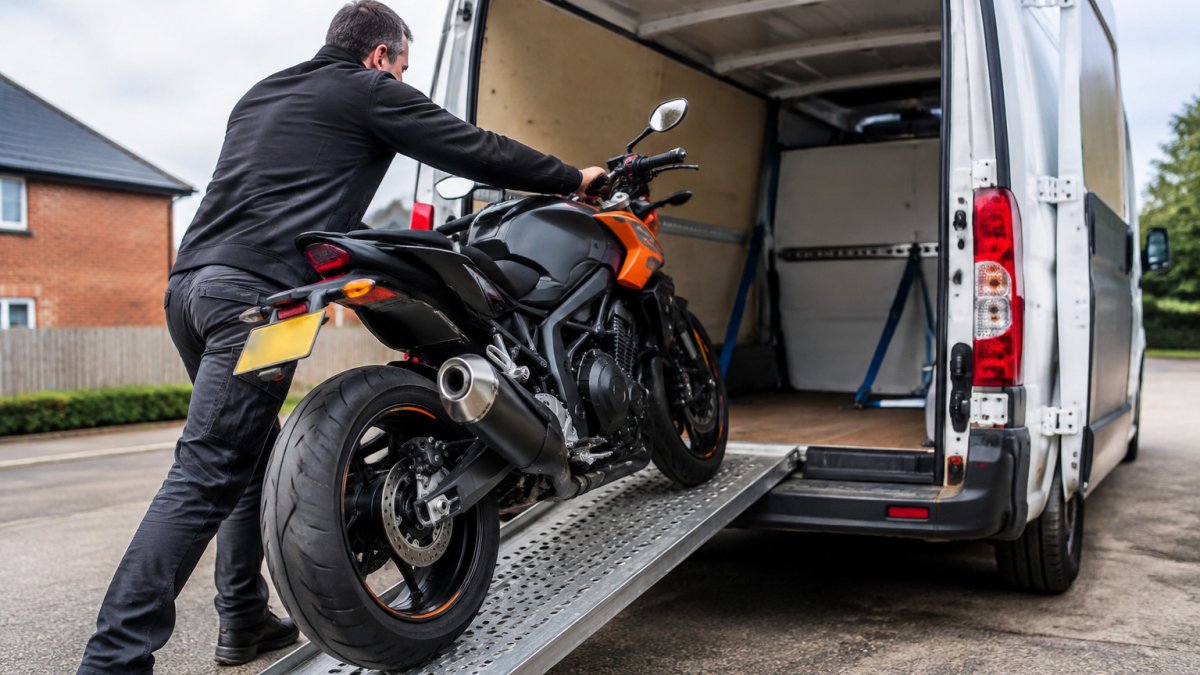
Improper loading risks further damage and injury, and a bike that shifts in a van can damage the frame, the forks or the fairing. Professional recovery is usually the safer choice when the bike will not roll, the route is long, or you lack suitable equipment.
Local logistics that change the decision
The road network here adds its own complications. Some crossings and tunnels in the area have height and width restrictions, so check the rules before taking a bike through them on a trailer. The M53 and M62 corridors carry heavy commuter traffic, and a bike on a narrow slip road or a tight residential street around Liverpool or Birkenhead needs careful positioning of the recovery vehicle. Give the operator the nearest junction or landmark, not just a postcode, and move to a safe spot before the vehicle arrives.
Motorcycle-specific transport safety
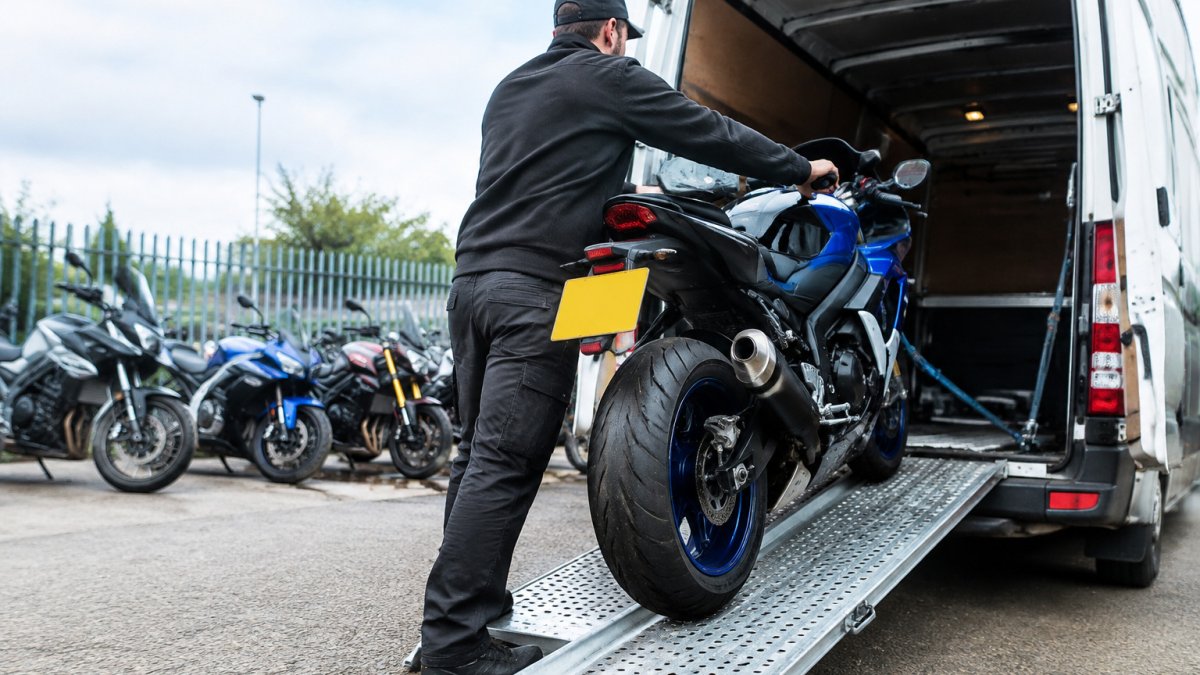
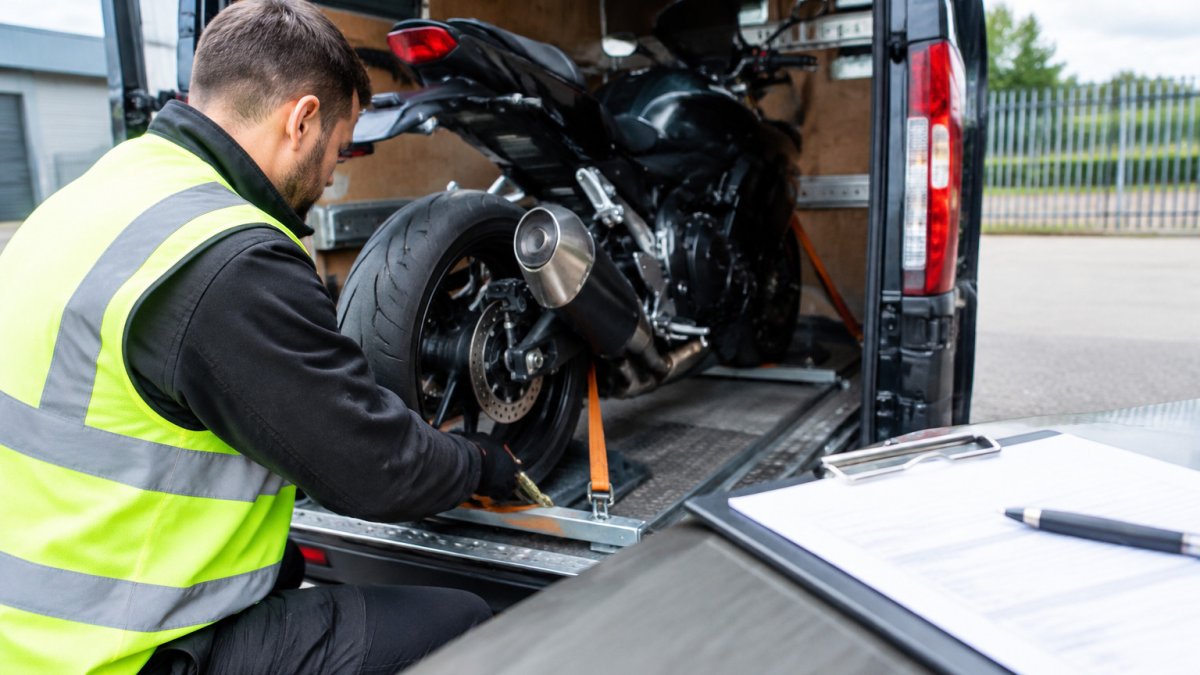
Motorcycles need specific securing: strap the bike at the frame or forks rather than the handlebars or mirrors, keep the fuel tap off to prevent leaks, and check that the carrier is rated for the weight of the bike. Soft tie-downs and a proper front-wheel cradle protect sports bikes and cruisers differently, and a carrier that handles one may not handle the other. Inspect straps before each journey and re-check them after the first few miles.
Watch out: a bike that rolls freely on a flat road can still shift on a ramp, so never load alone if you can avoid it.
The table below sets out when a bike can reasonably be moved yourself and when professional recovery is the safer choice.
| Situation | Suggested route | Reason |
|---|---|---|
| Bike rolls freely and steers straight | DIY may be reasonable | Short, quiet moves only |
| Engine seized or chain damaged | Professional recovery | Bike will not roll safely |
| Route is long or on motorway | Professional recovery | Distance and traffic add risk |
| No rated ramp or tie-downs | Professional recovery | Improper loading risks damage |
| Heavy tourer with panniers | Professional recovery | Load changes the centre of gravity |
Motorcycle-Specific Transport Safety and Post-Recovery Garage Choices
Motorcycles need specific securing: strap the bike at the frame or forks rather than the handlebars or mirrors, and keep the fuel tap off to prevent leaks. Check that the carrier is rated for the weight of the bike, and inspect straps before each journey.
Once the bike reaches a garage, choose a workshop with experience of your make and model. Ask for a written estimate before work starts, and keep the invoice for any warranty or insurance claim.
Booking Your Recovery or Transport with Smiffy's
If your bike has broken down, is new or used, or needs moving for a track day or rally, moving your pride and joy with care is what we do, so call us to book a recovery or request a quote.
Frequently Asked Questions
What should I do if my motorcycle breaks down?
First, get somewhere safe, away from live traffic, and switch on your hazard lights. If you are on a motorway or a fast A-road, keep yourself and your passenger behind any barrier where possible. Next, check whether your breakdown cover or insurance includes roadside assistance and note your policy number and your exact location, including a nearby landmark or road sign. Call your provider or a specialist recovery service, and describe the fault as precisely as you can. Do not attempt roadside repairs on a busy carriageway.
How do I arrange motorcycle breakdown recovery?
Start by checking your motorcycle breakdown cover or insurance policy, as many providers include roadside assistance and recovery for motorcycles, mopeds and scooters. If you do not have cover, contact a recovery service directly and give them your location, the bike's make and model, whether it will start, and where it needs to go. Ask for an estimated arrival time and a full price before the recovery vehicle is dispatched. Keep your registration document nearby, as you may be asked for details.
How much does motorcycle recovery cost?
Motorcycle recovery pricing depends on the distance travelled, the time of day, the type of recovery needed and whether you hold a policy that covers the call-out. Without cover, a one-off recovery is charged separately from any policy, so always request a quote before agreeing to the job. For a current price for Smiffy's motorcycle transport services, check the pricing information on the Smiffy's website or request a quote directly, as costs vary with the collection point, the destination and the date.
Can a motorcycle be recovered after an accident?
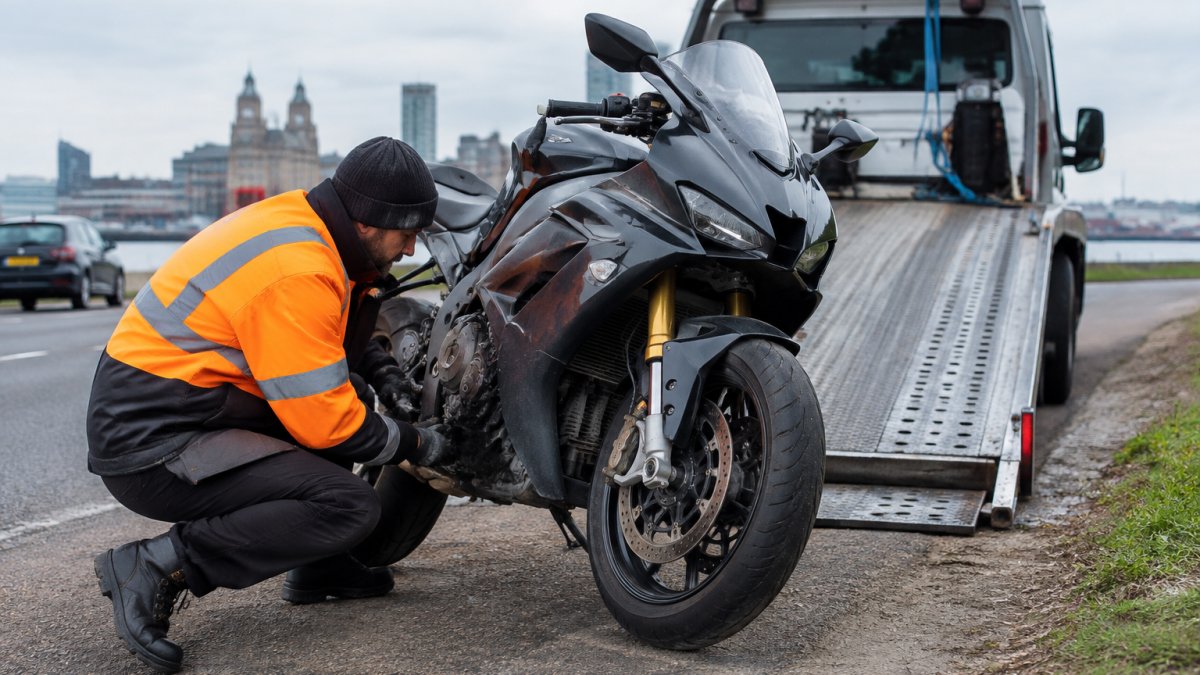
Yes. A motorcycle involved in a collision can be collected by a recovery service and moved to a garage, a repairer or a secure storage location. If you have been in an accident, first make sure everyone is safe and that emergency services have been called if needed. Then contact your insurer, as they will often arrange recovery as part of an accident claim. Recovery companies can usually transport a damaged bike on a flatbed, which reduces further harm to the frame and components.
Can a recovery service transport a motorcycle that will not start?
Yes. Recovery vehicles are designed to carry motorcycles that will not start, including those with a flat battery, fuel system faults or mechanical failure. The bike is loaded and secured on a flatbed or a suitable carrier rather than ridden, so a non-running machine is not a barrier to recovery. Tell the operator the bike is not running and where the bike is located, as this helps them choose the right vehicle and equipment for a safe collection.
What is the difference between breakdown cover and motorcycle transport?
Breakdown cover is an insurance-style service that sends help when your bike fails, typically including roadside repair attempts and recovery to a nominated destination. Motorcycle transport is a planned service that moves a bike from one place to another, such as from a dealership to your home or to a track day circuit, and is usually booked in advance. Breakdown cover responds to emergencies; transport handles planned journeys with specialist equipment and insurance for the bike during its move.
Does motorcycle breakdown cover include recovery to any destination?
This depends entirely on the policy. Some motorcycle breakdown cover includes recovery to a nominated garage or home address, while others limit the distance or the number of call-outs in a year. Read the policy wording carefully and check the mileage limit, the destination rules and any exclusions before you need the service. If recovery to a specific destination matters to you, confirm it with the provider before you buy.
What information should I give a motorcycle recovery service?
Give the operator your exact location, a nearby landmark, the make, model and year of the motorcycle, and whether it is running. Tell them where you want the bike taken and whether anyone needs to be collected too. Mention any known faults, whether the bike is locked or fitted with alarms, and whether it is a classic or high-value machine that needs careful handling. Accurate information helps the recovery team arrive with the right equipment and quote a realistic price.