 Ultimate guide
Motorcycle Transport Insurance: What Is Covered in the UK
Quick Summary
Motorcycle transport insurance coverage in the UK depends on whose policy applies at each stage of the move. Your own rider policy usually covers the bike at home, while the carrier's goods in transit cover typically protects it once it is in their custody. Check both policies and get the limit and excess in writing before booking.
- Your standard rider policy may not respond once the bike is on a third party's trailer.
- Professional carriers usually hold goods in transit cover, but the limit depends on their policy.
- Ask whether the policy limit matches the declared value of your bike, in writing.
- Complete a dated condition report with photographs at collection and at delivery.
- Declare all modifications and accessories, as undeclared parts may reduce any claim.
Table of Contents
- What Motorcycle Transport Insurance Actually Covers
- Types of Motorcycle Insurance Cover Compared
- Motorcycle Courier Insurance and Delivery Rider Cover
- Who Is Insured During Collection, Loading, Unloading and Delivery
- Motorcycle Insurance Exclusions to Check Before You Book
- Motorcycle Damage During Transport: Claims, Evidence and Limits
- Policy Limits, Excesses and Valuation for Custom and Classic Bikes
- Questions to Ask Your Transporter Before Booking Your Bike's Journey
- Frequently Asked Questions
What Motorcycle Transport Insurance Actually Covers
Last Updated: 7 November 2026
Moving a motorcycle across the UK is rarely a problem until something goes wrong in transit, which is why understanding motorcycle transport insurance coverage in the UK matters before you book. Smiffy's motorcycle transport handles two-wheeled moves across Merseyside and the UK, and we see the same question from almost every customer: does my bike stay covered while it is on someone else's trailer? The short answer is that it depends on whose insurance applies, and the cover that protects the bike is usually not the cover the rider already holds. Motorcycle transport insurance coverage in the UK is best understood by separating the policy held by the carrier from the policy held by the owner.
Your own rider policy typically covers the bike when it is ridden or parked at home. Once it is loaded onto a transport vehicle, that protection may no longer respond in the way you expect. A carrier's goods in transit cover is designed specifically for the period when property is moved by someone else. Understanding which policy applies at each stage is the single most useful thing you can do before booking.
Goods in transit cover for professional carriers
Goods in transit insurance is the policy a professional carrier typically holds to protect a customer's property while it is being moved. For motorcycle transport, the cover is intended to respond to loss or damage occurring during carriage, subject to the policy terms. The limit actually available depends on the carrier's policy and the declared value of the machine, so ask for the figure in writing before booking.
We recommend asking any transporter directly which limit applies, what the excess is and whether the declared value of your bike is written into the carriage agreement. A high policy limit is only useful if it matches what your machine is worth.
Why your standard rider policy may not apply during transit
Many riders assume their motorcycle policy follows the bike wherever it goes. It often does not. Standard motorcycle policies are usually written around use on the road and storage at a registered address, not around a third party's trailer on a motorway. There is frequent confusion on this point, and it is one of the main reasons owners arrive at a claim without the cover they assumed they had.
Check your own policy wording before you book. Ask whether transit is excluded or restricted, and whether your insurer will confirm in writing what happens if the bike is damaged while being carried by someone else.
Types of Motorcycle Insurance Cover Compared
Motorcycle insurance comes in several levels, and the differences matter once a bike is moved. Third-party only cover pays for injury and damage you cause to other people and property, but does not repair your own machine (Vehicle insurance: Overview). Third-party, fire and theft adds protection if the bike is stolen or damaged by fire. Comprehensive cover is the broadest and generally includes accidental damage to your own motorcycle, whether it is ridden or carried.
Legal expenses cover is a separate add-on that helps pay for legal advice and representation if you need to pursue a claim. For a bike being transported, the practical question is whether your chosen level of cover responds to damage at all, and whether the transporter's policy will meet any gap. A third-party only policy will not repair your own machine after an incident in transit, so the transporter's goods in transit cover becomes the key protection in that case.
The right combination depends on the value of your bike, how often it is moved and whether you use it for work.
Motorcycle Courier Insurance and Delivery Rider Cover
Motorcycle courier insurance is a different product from ordinary rider cover. It is written for people who ride for a living and carry goods or parcels, and it often includes business use, higher mileage and delivery activity. Delivery rider cover is usually priced and underwritten on that basis, so a rider who uses a bike for deliveries needs a policy that explicitly includes that work.
If you are moving a bike for a delivery business, make sure the policy names commercial use. For a bike moving for track days instead, you can compare transport methods and see how door-to-door delivery protects your bike. Cover written for private use may not respond to a claim arising from paid delivery work, and an insurer can decline a claim on that ground alone.
Who Is Insured During Collection, Loading, Unloading and Delivery
Insurance responsibility does not switch cleanly from owner to carrier at a single moment. It moves in stages, and the policy that responds depends on what is happening, where it is happening and who is in control of the bike. Most disputes arise because the owner assumes one policy covers the whole journey while the carrier assumes another. The practical way to avoid that is to map the journey and confirm cover at each stage.
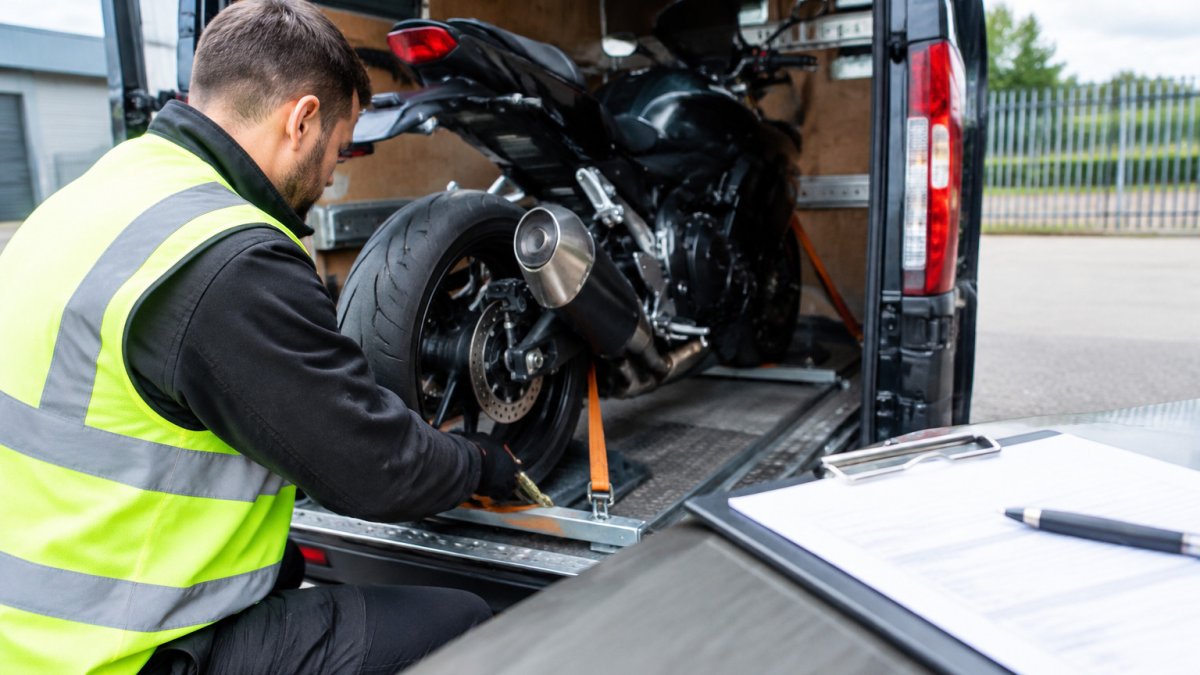
Collection and pre-loading inspection. Before the bike is loaded, it is usually still in your care or on your premises. Your own motorcycle policy is the one most likely to respond if the bike is damaged or stolen at this point, although some policies restrict cover once the bike has been handed over for transport. The carrier's goods in transit cover typically begins when the bike is formally accepted into their custody, which is why a dated condition report signed by both parties matters.
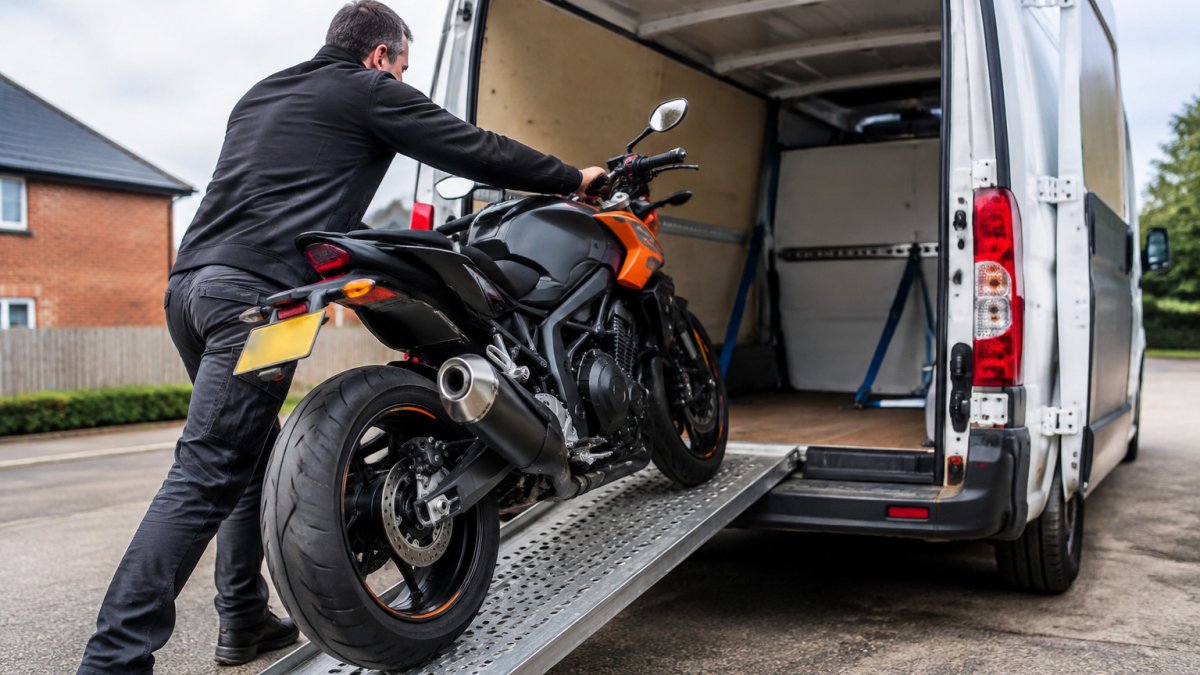
Loading and securing. This is the highest-risk stage for damage and the least clear for liability. If the bike is damaged while being pushed up a ramp or strapped down, the question is whether the carrier's staff were handling it or whether you were. If you have just won an auction, you can read the step-by-step process for booking collection and delivery so the timing lines up with the handover.
Transit between vehicles or overnight storage. Many moves involve a bike being transferred between a collection van and a long-distance trailer, or stored overnight at a depot. Cover can lapse or change at these points. Some goods in transit policies exclude storage entirely, or limit it to a short period, while others extend cover to temporary storage as part of the carriage. If your bike will be held overnight, confirm in writing whether the carrier's policy still applies and what security conditions are required.
Unloading and delivery. The mirror image of loading applies. Damage during unloading is a common source of claims, and it is not always clear whether the incident happened on the trailer, on the ramp or on the ground. The condition report at delivery is your evidence. Sign it only after you have inspected the bike in good light and noted any new damage. If you sign without inspecting, you may struggle to prove the damage occurred before delivery.
Who is insured at each stage. In broad terms, your own rider policy protects your interest in the bike when it is in your control. The carrier's goods in transit policy protects your property while it is in their custody for reward. The carrier's motor trade or public liability cover may respond to injury or damage to third parties caused during the move, but it does not repair your bike. The driver's own motor insurance is unlikely to cover your motorcycle as cargo.
Watch out: if you hand over the bike without a signed condition report and it is damaged during loading, the carrier may argue the damage pre-existed. A dated photographic record at collection and delivery is the single most effective protection you have.
Motorcycle Insurance Exclusions to Check Before You Book
Every policy contains exclusions, and these are where most claims fail. Common exclusions include damage caused by poor packing or securing, mechanical breakdown unrelated to an incident, and wear and tear. Some policies also exclude high-value or modified machines unless they are declared in advance.
Before booking, read the exclusions section of both your own policy and the transporter's carriage terms. Pay particular attention to any wording about custom parts, aftermarket fairings or accessories, which may not be included in the declared value.
Watch out: a bike with unlisted modifications may be undervalued on the transport paperwork, so a claim can be reduced even when the damage itself is covered. Declare every modification at the point of booking.
Motorcycle Damage During Transport: Claims, Evidence and Limits
When damage occurs, the claim is only as strong as the evidence behind it. Photograph the bike from all sides at collection and delivery, note the odometer reading and keep copies of the condition report. Record the date, time and location where you first noticed the damage, and report it to the transporter in writing straight away.
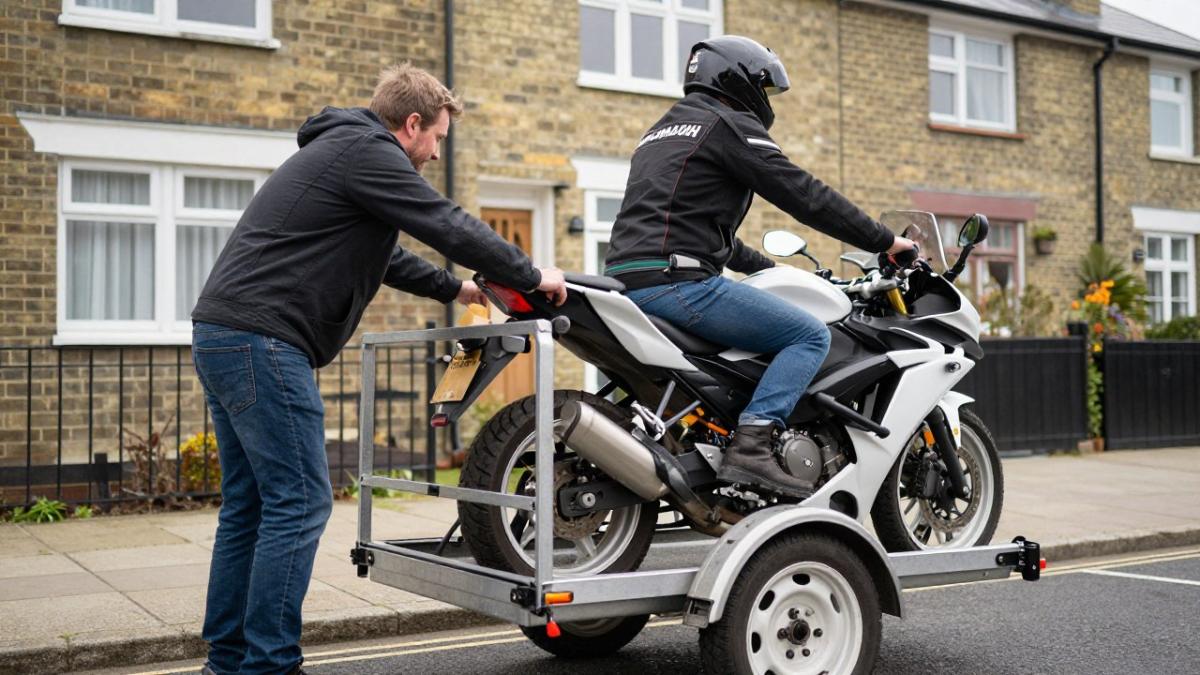
Expect that a claim will be assessed against the policy limit and excess. A repair that costs more than the limit will not be paid in full, and a claim below the excess may not be worth pursuing. Ask how the carrier values the bike and how it will settle a total loss.
Policy Limits, Excesses and Valuation for Custom and Classic Bikes
A policy limit is not the same as a payout. Goods in transit policies are usually written with a per-bike limit and sometimes a separate per-load limit, and the lower of the two may cap what you receive. A carrier's headline per-bike limit is the maximum the policy will pay in any one claim, not a guarantee that your bike is insured for its full value.
Per-bike and per-load limits. Ask the transporter whether the limit applies per motorcycle or per journey. If you are moving two bikes on the same load, a per-load limit could leave one or both underinsured. The same applies if the carrier consolidates your bike with other customers' machines. Confirm the limit that applies to your specific booking, not the headline figure on their website.
Excesses. An excess is the first portion of any claim you pay yourself. It may be a fixed sum, a percentage of the claim or a combination of both. Some policies apply a higher excess for theft, for damage during loading, or for bikes over a certain value.
Agreed value versus market value. Most motorcycle policies settle on a market value basis, which means the insurer pays what the bike was worth at the time of loss, not what you paid for it. Agreed value policies fix a sum in advance, usually supported by a professional valuation, and pay that figure in the event of a total loss.
Underinsurance. If you declare a value of £8,000 for a bike worth £12,000, the insurer may apply average and reduce the payout in proportion to the underinsurance. In practice, that means a £4,000 repair could be settled at £2,667. The remedy is to declare the full replacement value, including the cost of any modifications, and to keep that figure up to date as the bike changes.
Accessories, parts and modifications. Standard policies often exclude or limit cover for accessories that are not factory-fitted. Aftermarket exhausts, fairings, luggage systems, upgraded suspension and custom paint may not be included in the declared value unless you list them. For a transported bike, the carrier's policy may treat accessories as part of the bike or as separate items with their own limit.
Classic and custom valuations. Obtain a written valuation from a recognised specialist, keep receipts for restoration or modification work, and photograph the bike from every angle before it is collected. Provide a copy of the valuation to the transporter and confirm that the declared value on the carriage agreement matches it. If the carrier's policy limit is lower than your valuation, you may need to arrange separate cover or choose a different transporter.
Watch out: a headline per-bike limit can create a false sense of security. If the declared value on your booking is lower than the bike's true worth, the claim will be scaled back to the declared figure.
The table below summarises the key figures and terms a reader should check against their own policy and carriage agreement.
| Item | Value | Note |
|---|---|---|
| Policy limit | Per-bike or per-load | Lower of the two may cap the payout |
| Excess | Fixed sum, percentage or both | Ask if it applies per claim or per bike |
| Valuation basis | Market value or agreed value | Confirm which basis the carrier uses |
| Underinsurance | Average may be applied | Declare the full replacement value |
| Accessories | Often excluded unless declared | List aftermarket parts separately |
| Classic and custom bikes | Written valuation recommended | Keep receipts and photographs |
Questions to Ask Your Transporter Before Booking Your Bike's Journey
Asking the right questions before booking protects you more than any policy wording can. Use the list below as a checklist.
- Does your goods in transit policy cover the full declared value of my bike?
- What is the excess, and does it apply to every claim?
- Do you provide a written condition report at collection and delivery?
- Are my modifications and accessories included in the declared value?
- How are claims assessed, and how long do they usually take to settle?
- Is the bike covered during loading, unloading and any storage stops?
Get the answers in writing. For the detail behind any quote, see our motorcycle transport pricing and insurance explained. If you are ready to move your bike, you can request a quote for your transport and we will confirm the cover that applies before you commit.
Get in touch to book your collection, or call us to book.
Frequently Asked Questions
What does motorcycle transport insurance cover?
Motorcycle transport insurance usually covers the bike against loss or damage while it is in the care of the transporter, from collection through to delivery. Cover is normally provided under a goods in transit policy held by the carrier, and it is designed for physical damage, theft from the vehicle and accidents during loading or transit. It does not automatically extend to personal belongings, accessories you have not declared, or wear and tear. Check the cover limit and confirm whether it matches your bike's agreed value before you book.
Does a motorcycle need to be insured while it is being transported?
Your motorcycle does need to be insured at all times, but the cover that applies during transport depends on who is moving it. A standard rider policy usually covers the bike when it is ridden or parked, not while it is on a trailer or in a carrier's vehicle. For transport, the carrier's goods in transit insurance is the main protection. Ask the transporter to confirm in writing what policy applies and whether your bike is covered from the moment it is collected until it is handed back to you.
Does a motorcycle courier's insurance cover damage in transit?
A courier's insurance usually covers damage in transit, provided the damage happens while the bike is in their custody and is not caused by an excluded event. Coverage typically depends on documented condition at collection and delivery, so a thorough inspection report is important. Courier policies vary, and some carry excesses or limits that are lower than the bike's value. Request a copy of the certificate and confirm the cover limit, the excess and whether the policy names the bike or applies on a per-vehicle basis.
What is usually excluded from motorcycle transport insurance?
Common exclusions include pre-existing damage not recorded at collection, mechanical or electrical failure unrelated to the transport, wear and tear, and damage caused by poor packing or securing that you asked the carrier to avoid. Many policies also exclude unofficially fitted accessories, personal items left on the bike and losses where there is no evidence of forced entry or an accident. Read the exclusions section carefully and ask the transporter to explain any that apply to your bike.