 Ultimate guide
Motorcycle Transport from Online Purchase: A UK Buyer's Guide
Last Updated: 5 November 2026
Quick Summary
Motorcycle transport from an online purchase is a collection and delivery service that moves a bike from the seller to your address when you have not seen it in person. The process involves agreeing a collection window, booking a provider, collecting the bike, and inspecting it at delivery before signing for it.
- Verify the V5C, MOT history and chassis and engine numbers before any money changes hands.
- Request a short video of the bike started, idling and moved under its own power.
- Distance, access and bike type are the main factors that drive the price of transport.
- Local collections within the same county can often be completed within two to four working days.
- Check the transport insurance excess and whether cover matches the bike's full value.
Table of Contents
- Pre-Purchase Checks Before You Buy a Motorcycle Online
- Motorcycle Transport Cost: What Affects the Price
- Motorcycle Delivery Times: Realistic Timescales Across the UK
- How to Arrange a Collection From a Private Seller, Dealer or Auction
- Motorbike Transport Insurance, Liability and Damage Claims
- Non-Running, Modified and Classic Motorcycles
- Motorcycle Transport Checklist: From Purchase to Handover
- Booking Your Motorcycle Collection With Smiffy's
- Frequently Asked Questions
Buying a motorcycle online has become routine, but getting the bike from the seller's driveway to your own in one piece is where many buyers feel exposed. Smiffy's motorcycle transport handles that final leg for riders across the UK, and this guide explains how the process works, what affects the price, and what to check before you commit. You can also browse the transport services available for new, used and broken-down bikes.
A motorcycle transport from online purchase is a collection and delivery arrangement that moves a bike from the seller to the buyer when you have not seen the machine in person. Most of the risk sits in three places: the condition at collection, the handling in transit, and the handover at the other end.
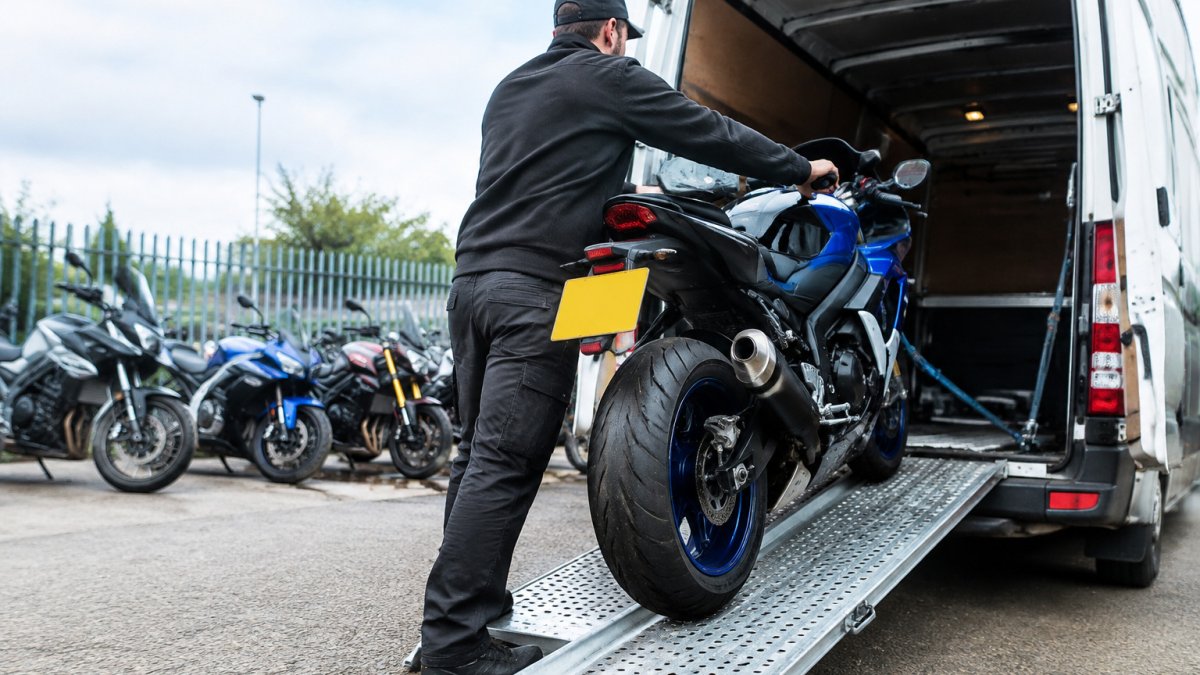
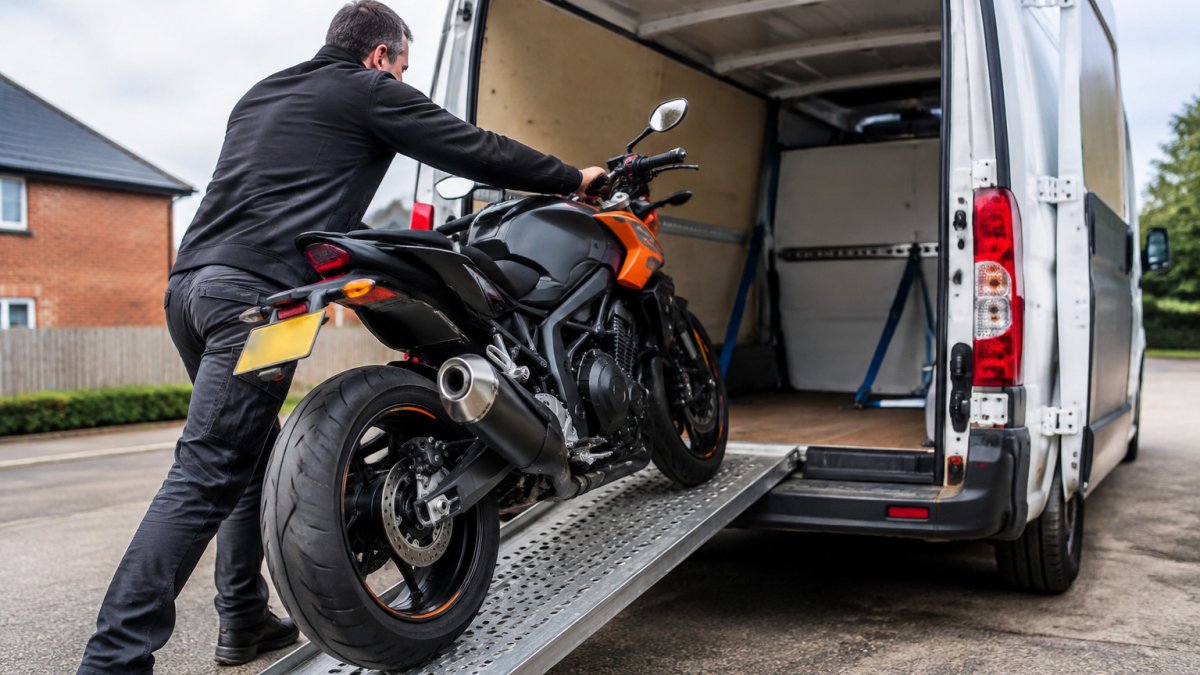
Here is the typical sequence. You agree the sale and confirm the seller's address and collection window. You book transport with a provider, who arranges a collection date that suits both parties. The bike is then collected, moved and delivered to your address, where you check it before signing for it.
We recommend getting the seller to confirm access details early, because a bike parked behind a gate or on a narrow terrace changes what equipment is needed. Tell the transport company about the access in advance so the quote and the crew match the job.
Pre-Purchase Checks Before You Buy a Motorcycle Online
Before any money changes hands, verify the bike itself. A photo gallery cannot show a cracked frame or a leaking fork seal, so ask for specific evidence.
Request the V5C registration document and check that the seller's name and address match it. Ask for a recent MOT certificate and check its history on the government's MOT history service (Check the MOT history of a vehicle). Ask for the chassis and engine numbers and compare them against the paperwork and the frame stamping.
Ask the seller for a short video of the bike started, idling and moved under its own power. A seller who refuses this has told you something. Be cautious of a price well below comparable listings, and of any request to pay a deposit by bank transfer before you have seen the paperwork.
Confirm that the machine is insured for transport and that the seller will hand over the keys and any spare key on collection.
Motorcycle Transport Cost: What Affects the Price
Pricing depends on quantity, dates, distance and the type of collection, so there is no single fixed figure. Pricing for Smiffy's motorcycle transport is available on its website, and we recommend requesting a quote there for the exact journey.
Always get a written quote for your specific journey, as pricing depends on quantity, dates, distance and the type of collection.
Distance, Access and Bike Type
Distance is the largest driver of cost, but access matters as much. A bike that can be loaded from a kerb in a wide road is simpler to move than one in a tight courtyard or a block of flats with no ground-floor access. Bike type also changes the job: a fully faired sports machine, a large touring bike and a small scooter each need different strapping and loading equipment.
Access problems can add a surprising amount to a quote. If the driver cannot get a trailer within a reasonable distance of the bike, they may need to push it along a footpath or arrange a meeting point, both of which take time. Tell the provider about narrow lanes, height barriers, permit-only parking or steep driveways at the quoting stage so the price reflects the real job rather than a best-case assumption.
Collection timing can also affect price. A collection that must happen on a fixed day at short notice is usually harder to schedule than one with a flexible window. Midweek collections with a few days' notice are typically the cheapest to arrange, while weekend or same-day requests attract a premium because they disrupt planned routes.
Why Quotes Vary Between Providers
Quotes differ because providers include different things. Some quote door-to-door, others a terminal-to-terminal service. Some include full insurance and a documented condition inspection as standard, while others charge extra for them. Compare the scope of each quote, not just the headline figure. A lower price that excludes insurance or inspection may cost more if something goes wrong.
Ask each provider three questions before you compare: what is the excess on your insurance, is the bike covered for its full purchase value, and is a condition report completed at both collection and delivery? A quote that answers all three in writing is easier to compare than one that only gives a number. Watch out: a quote that is dramatically cheaper than the rest often reflects a shared load with a long wait, no goods-in-transit cover, or a driver who is not insured for your bike's value.
Motorcycle Delivery Times: Realistic Timescales Across the UK
Delivery time depends on distance, the collection window agreed with the seller, and how many other jobs the transport company has on its schedule. A short local move can often be arranged quickly, while a journey across the country needs more planning.
As a realistic guide, a local collection within the same county can often be completed within two to four working days of booking. A journey between, say, the north-west and the south-east typically takes three to seven working days on a shared load, because the provider will group your bike with others heading in a similar direction. A long-distance move to the far north of Scotland or to a remote rural address can take a week or more, simply because fewer loads travel those routes. Dedicated transport, where the bike travels alone, can be faster but costs more.
A flexible collection window can help your bike be scheduled sooner, so it is worth confirming your availability with the provider.
Build in a margin. If you have a track day or rally booked, arrange transport a week or more ahead rather than the day before. Ask the provider for an estimated date range at the quoting stage, and confirm the collection date once the seller has agreed to it.
Watch out: if the seller can only release the bike on a single day, tell the provider immediately. A rigid collection date can push your delivery back by several days if it does not fit the planned route, and some providers charge a rebooking fee if the bike is not ready when the driver arrives.
Weather and daylight also play a part in winter. Ice, high winds and short daylight hours can delay collections, particularly for non-running bikes that need winching. If your purchase is time-critical, ask the provider how they handle weather delays and whether they will hold your booking without penalty.
The article gives these typical timescales for different journeys, so you can plan around them.
| Journey type | Typical timescale | Note |
|---|---|---|
| Local collection within the same county | Two to four working days | Can often be arranged after booking |
| Shared load between north-west and south-east | Three to seven working days | Grouped with other bikes heading the same way |
| Far north of Scotland or remote rural address | A week or more | Fewer loads travel these routes |
| Dedicated transport (bike travels alone) | Faster than shared | Costs more |
How to Arrange a Collection From a Private Seller, Dealer or Auction
The process differs slightly depending on who you are buying from.
Private seller: Agree a collection window directly with the seller, confirm the address and access, and arrange payment and paperwork handover on the day.
Dealer: Most dealers have a standard collection procedure and may already work with transport companies. Ask whether they will release the bike to a named carrier and what documents they need.
Auction: Auction houses set payment deadlines and charge storage fees if a bike is not collected within a set period. Book transport as soon as you win, and confirm the collection window with the auction house before the storage clock starts.
Whichever route you take, have the registration document, the keys and a record of the agreed condition ready for the driver.
Motorbike Transport Insurance, Liability and Damage Claims
Check the transport company's insurance wording before booking: what it covers, what it excludes, the excess, and the claims process. You can read a full explanation of motorcycle transport pricing and insurance, including what is covered in transit. Ask whether it covers the bike's full value.
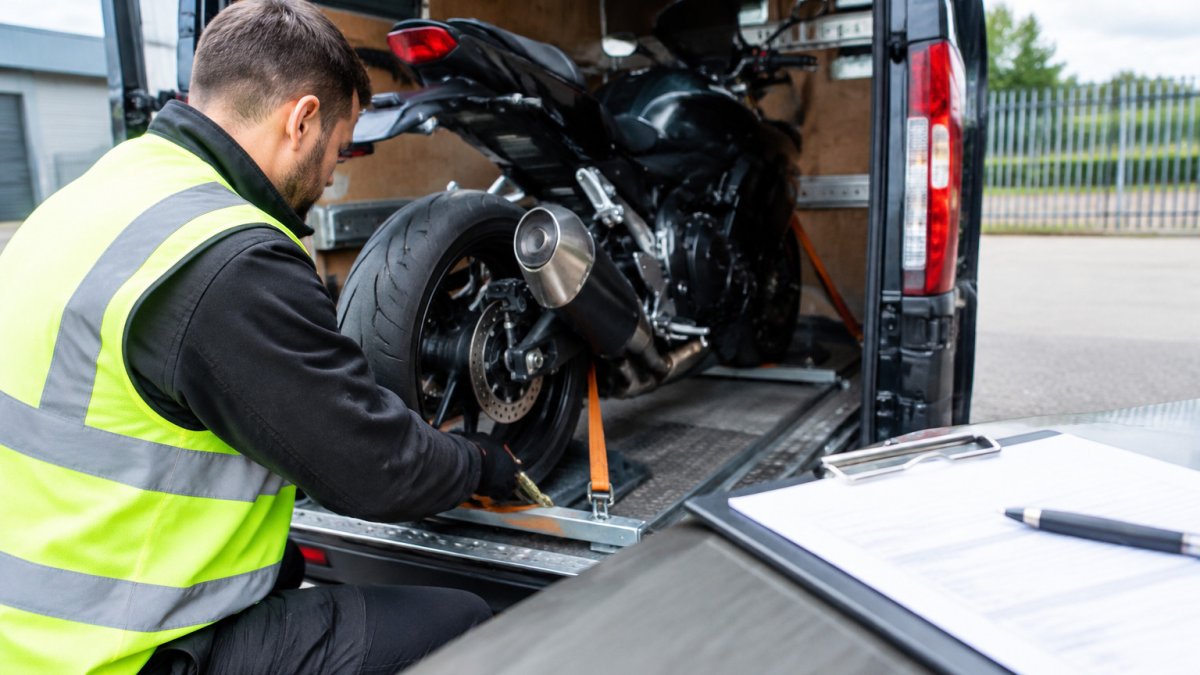
Your own motorcycle insurance may not cover the bike while it is being transported by someone else, so ask your insurer as well. Keep the pickup condition report and photographs. If damage occurs, notify the transport company in writing straight away, and do not sign a delivery note that records the bike as undamaged if you can see a problem. Note any damage on the paperwork before you sign.
Any claim will depend on the policy terms and on evidence, which is why a documented inspection at both ends is so valuable.
Non-Running, Modified and Classic Motorcycles
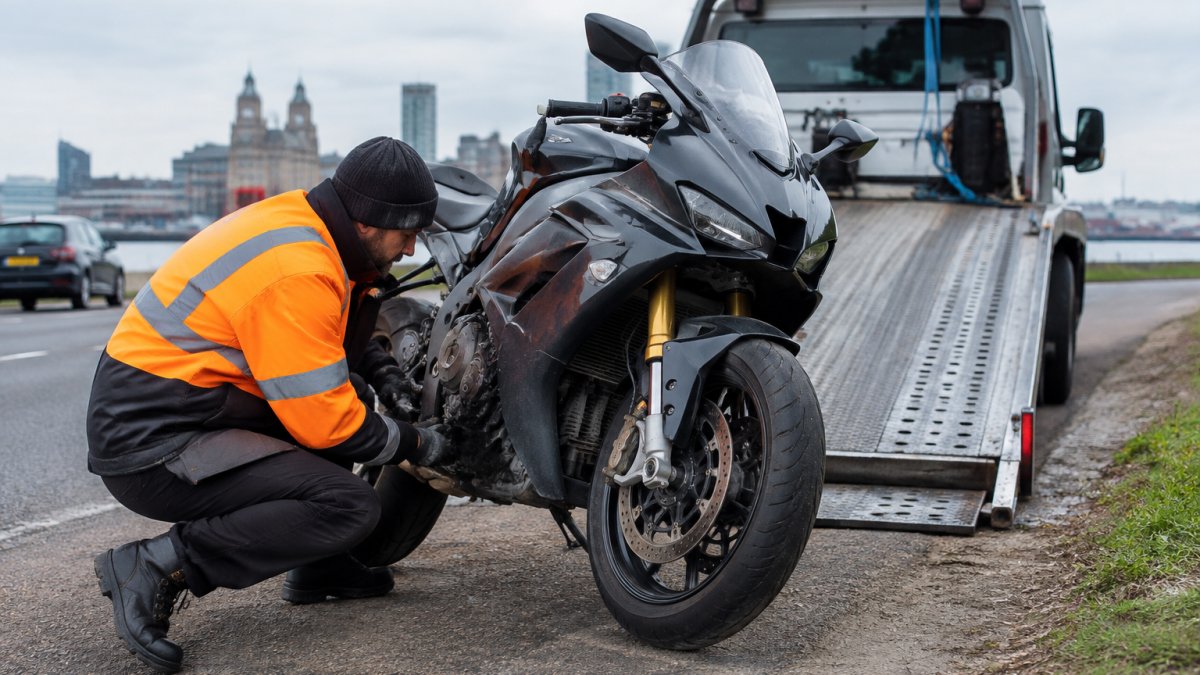
Non-running bikes, heavily modified machines and classics need more care. A non-runner may need winching rather than riding onto a trailer, which can change the equipment and the price. Modified bikes with custom bodywork, unusual ground clearance or non-standard exhausts need extra attention to strapping points and clearance. Classics often carry high value and fragile original parts, so they benefit from enclosed transport and a detailed condition record.
Tell the provider about any of these features when you request a quote so the right equipment is sent.
Motorcycle Transport Checklist: From Purchase to Handover
- Verify the V5C, MOT history and chassis and engine numbers
- Request a video of the bike running
- Confirm the seller's address and collection access
- Book transport and agree a collection window
- Confirm insurance terms and the excess in writing
- Arrange payment and confirm the keys and documents
- Record the bike's condition at collection with photos
- Inspect the bike at delivery before signing
- Note any damage on the delivery paperwork immediately
- Keep all records until any claim is settled
Booking Your Motorcycle Collection With Smiffy's
Smiffy's motorcycle transport is run by a passionate rider with years of breakdown recovery experience, and the service is fully insured, door-to-door and nationwide, including Merseyside.
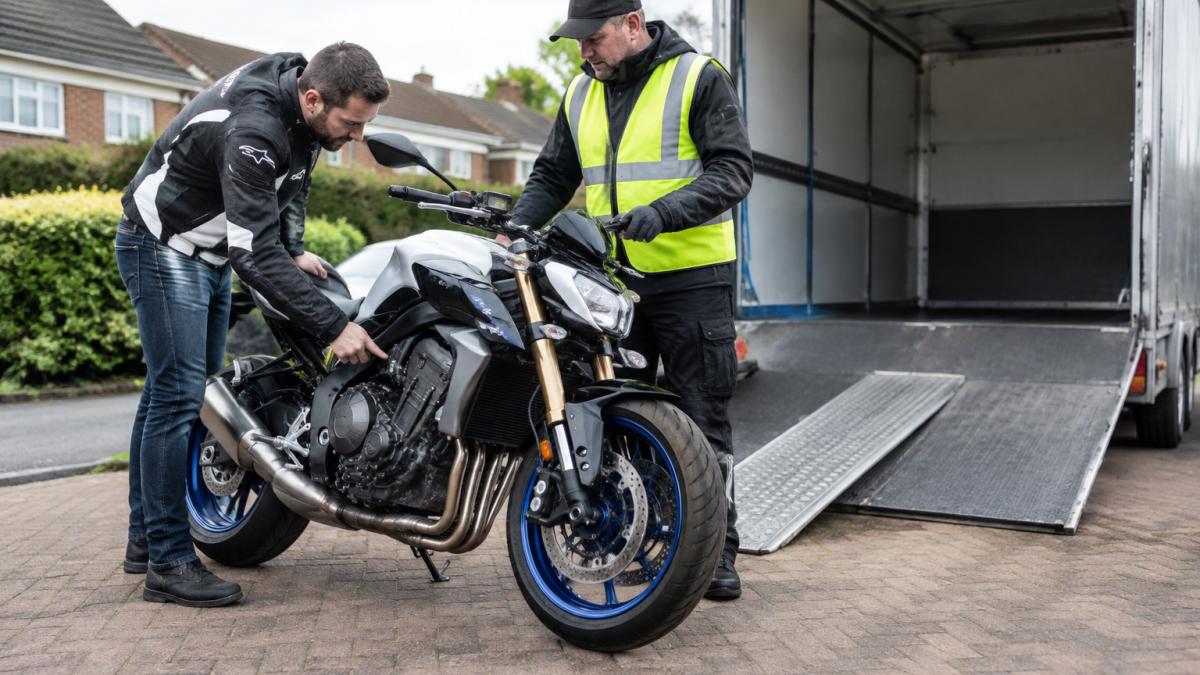
If you are buying a bike online and want it moved safely, request a quote from Smiffy's motorcycle transport for your journey, or call to book. Ask the team any questions about access, insurance or timing before you commit, and you will know exactly what is included before the bike leaves the seller's hands.
Frequently Asked Questions
How do I get a motorcycle delivered after buying it online?
Once the purchase is complete, arrange a collection with a motorcycle transport company, giving the seller's address and your delivery address. Confirm the collection date with the seller, ask for the bike's documents and a clear condition check, and arrange for someone to be present at handover. Most providers need the pickup location, the bike's make and model, and the date you want it moved. Booking early and confirming access at both ends avoids the most common delays. Pricing depends on distance, timing and bike type, so request a quote directly from Smiffy's for current figures.
How much does it cost to transport a motorcycle?
The cost of motorcycle transport depends on distance, collection access, the type and value of the bike, and how soon you need it moved. Shorter journeys within the same region usually cost less than long-distance moves. Non-running or modified bikes may need extra handling. Smiffy's does not publish fixed prices in this guide, so for an accurate figure check the pricing page on the Smiffy's website or request a quote for your specific collection and delivery addresses.
How long does motorcycle delivery usually take?
Delivery time depends on the distance between collection and delivery points, the collection date you agree with the seller, and the transport schedule. Local moves can often be completed within a few days, while longer journeys across the UK take longer. Booking in advance and confirming pickup dates with the seller reduces the risk of delay. If you need the bike for a specific event, such as a track day, tell the provider when you book so the schedule can be planned around it.
Does motorcycle transport include insurance?
Insurance cover varies between providers, so check the policy before booking. A fully insured service should state what it covers during transit, what the excess is, and how damage claims are handled. Ask whether the cover applies to the full value of your bike, including custom parts, and request the policy wording in writing. Keep photographs and the signed condition report from collection and delivery, as these are the evidence you will need if a claim is made.
Can a motorcycle transport company collect a bike from a private seller?
Yes, a transport company can collect from a private seller as long as the seller agrees to the collection and can hand over the bike with its documents. The seller should confirm the collection address, access arrangements and a time window, and the buyer should arrange payment and paperwork separately. Before collection, check that the seller has proof of ownership and that the bike's details match the paperwork.
What should I check before my motorcycle is collected?
Before collection, confirm the bike's make, model, registration and documents, and take clear photographs of its condition from all sides. Note any existing damage, scratches or missing parts, and make sure the bike is fuelled to the level agreed, with the battery in good condition and tyres inflated. Remove loose accessories and personal items, and confirm the collection address and access. Having these details ready makes the condition check at handover far easier to resolve.
How should I prepare a motorcycle for collection and delivery?
Clean the bike so that any existing marks are visible, and remove loose accessories such as mirrors that could be damaged. Secure or remove luggage, and make sure the fuel tank is at the level agreed with the provider. Check the battery, tyres and any locks, and tell the transport company about any non-running or modified features in advance. Preparing the bike properly makes the condition report more accurate and reduces disputes at delivery.
Can I arrange motorcycle transport before completing an online purchase?
Some buyers book transport once the sale is agreed but before the bike is physically collected, while others wait until payment has cleared. Confirm with the seller that the sale is final and that the bike and documents will be ready on the collection date. Booking transport before the sale is complete carries a risk if the purchase falls through, so many buyers prefer to confirm the deal first and then arrange collection with a provider.